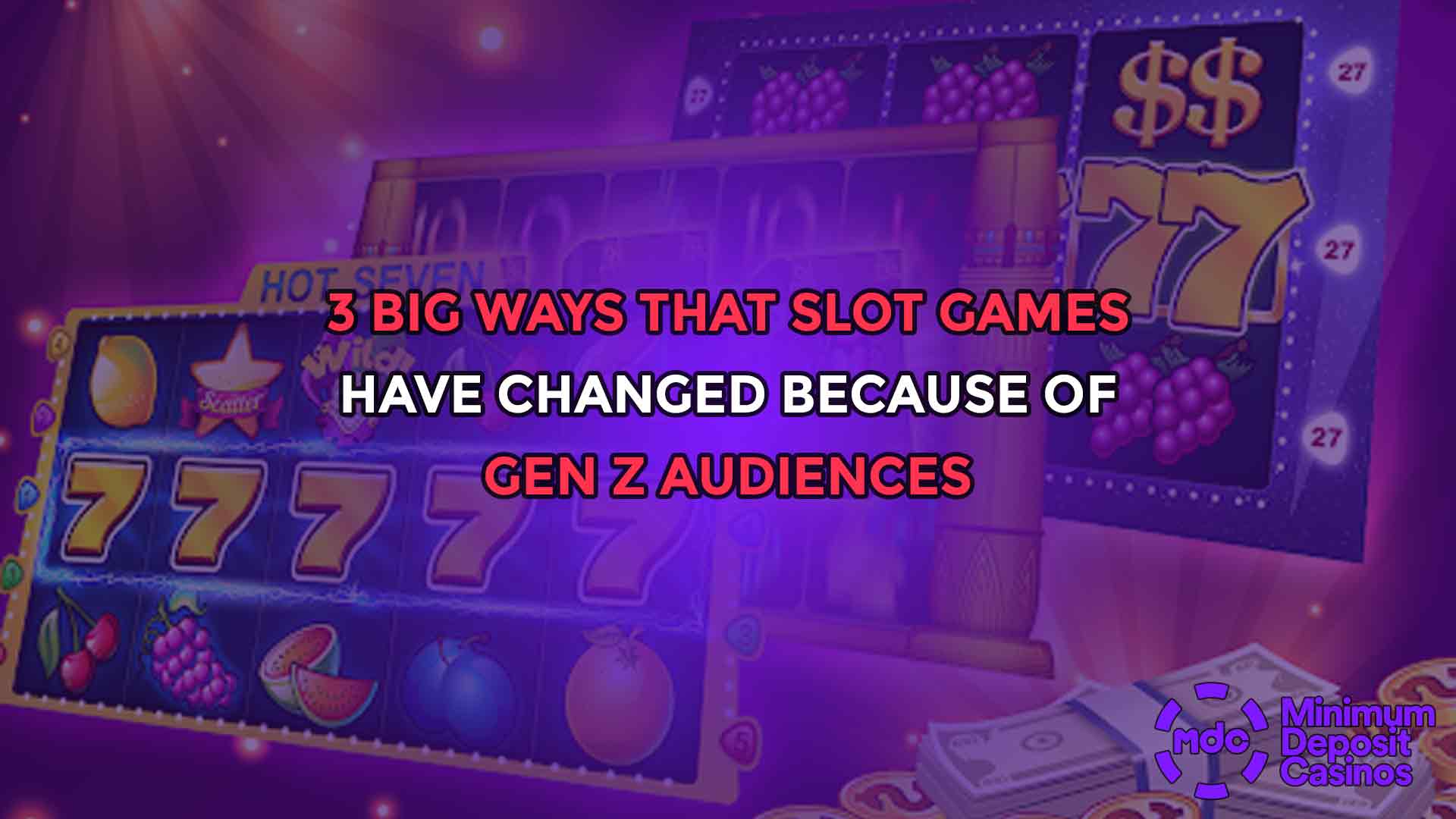
3 Big ways that slot games have changed because of Gen Z audiences
Slot games used to be the ultimate “set it and forget it” casino option: choose your stake, hit spin, watch the reels land, repeat. And while that simple loop is still the foundation, it’s no longer enough to hold attention—especially for Gen Z players who grew up with consoles, mobile gaming, streaming, and apps designed around interaction.
Today’s software providers are building slot titles with Gen Z expectations in mind, which is why you’re seeing more lists and conversations around the best online slots for younger players—games that feel interactive, modern, and designed for shorter attention spans.
Gen Z audiences are pushing slot developers to build experiences that feel less like passive, point-and-click entertainment and more like actual gameplay. The big shift isn’t that slots have stopped being slots—it’s that they’re being packaged in ways that feel more engaging, more varied, and more rewarding even when you’re not hitting a massive win every few spins.
In this article, we’ll look at three major ways this influence is showing up: more interactive mechanics, more immersive worlds, and stronger gamification and progression systems that make slot play feel like it has momentum—not just randomness.
The Rise of Interactive Game Mechanics
Classic slot design is basically: spin → outcome → payout (or not) → spin again. That’s fine for a quick session, but it can feel repetitive fast—especially for players used to games that constantly ask them to react, choose, collect, or complete something. Many of the best interactive online slot features are designed to keep players involved between spins, making gameplay feel less passive and more like a modern mobile game.
Modern slot games have responded by layering in “all these extra things” beyond a simple multiplier or basic free spins round. Developers have leaned into mechanics that create more frequent moments of decision, suspense, and change. The goal is simple: make each spin feel like it’s doing something—building toward a feature, transforming the grid, unlocking a new layer—rather than feeling like isolated, identical attempts.
You still don’t need skill to “beat” a slot (they’re RNG-based), but you’re often doing more than just clicking Spin and waiting. Even small interactions—like picking between options or triggering a side feature—make the experience feel more involved.
Engaging Bonus Features and Mini-Games
A major reason modern slots feel less repetitive is the focus on bonus rounds and mini-games, which add choice, variety, and more “hands-on” moments beyond the spin button. One of the clearest evolutions is the bonus round. Older slots often treated bonus features as simple variations: free spins with a multiplier, maybe a wild reel, maybe a scatter pay. Today, bonus rounds are frequently designed like mini-games—short interactive moments where the player chooses, reveals, upgrades, or steers the outcome.
Common examples include:
- Pick-and-reveal bonuses: You select symbols, chests, doors, or cards to uncover prizes, multipliers, or extra spins. The “choice” doesn’t turn it into a skill game, but it adds agency and keeps the feature from feeling automatic.
- Path or map bonuses: You move through stages (sometimes with branching routes), collecting rewards as you go. This creates a sense of journey rather than a single burst of spins.
- Hold-and-respin or collection bonuses: These features often feel like a puzzle moment—locking special symbols in place while you try to fill the grid or build a bigger prize.
What matters most is the pacing. Gen Z players are used to games that reward attention with something happening on-screen—visual feedback, progress bars, “nearly there” tension, evolving animations. Interactive bonus features deliver that. They break up the loop, reduce repetition, and turn the highlight moments of slot play into something you participate in, not just watch.
Dynamic Gameplay Elements
The other big mechanical shift is how much more dynamic the base gameplay has become. Instead of every spin being a standalone event with the same math and same feel, many modern slots include systems that actively reshape what “a spin” means.
Some popular innovations include:
- Megaways-style variable ways: The number of ways to win changes every spin, so the game feels less predictable. You’re not just spinning reels—you’re seeing the whole structure of the grid morph constantly. From Megaways and tumbling wins to symbol upgrades, progressive features in slots are now a key design focus for software providers trying to deliver constant novelty.
- Cluster pays / tumbling wins: Wins can cause symbols to vanish and new ones to fall into place, sometimes chaining into multiple wins from a single spin. That creates momentum and makes outcomes feel more “alive” than a single payline result.
- Reactive and transforming symbols: Expanding wilds, sticky features, symbols that upgrade, or mechanics that build over time (like “collect three to trigger”) keep players watching for what changes next.
These features align well with a generation that expects novelty and variety. If every spin looks and feels the same, attention drops. If the grid can expand, cascade, or evolve—if a spin can trigger a chain reaction—then the game feels richer, even if the core concept remains luck-based.
From Simple Themes to Immersive Worlds
Gen Z didn’t just grow up with casino games in the background—they grew up with high-production entertainment. Think open-world games, rich mobile titles, cinematic trailers, streamers reacting live, and visuals designed to be clipped and shared. That raises expectations across the board.
So slot themes have levelled up. It’s not enough to slap “Egypt” or “Fruit” onto a background and call it a day. Gen Z audiences are more likely to stick with games that feel like they’re offering an experience—something atmospheric, detailed, and modern.
This doesn’t mean every slot needs to look like a blockbuster video game. But it does mean the bar for visuals, sound, and theme cohesion is much higher than it used to be.
Advanced Visuals and Audio Design
Modern slot design increasingly leans into polished presentation:
- High-quality animations that react to wins, bonuses, and feature triggers
- Cinematic transitions into bonus rounds that feel like “levels” rather than pop-up screens
- Soundscapes that build tension, reward the player, and make the game feel energetic rather than mechanical
- Character-driven visuals where symbols are part of a coherent world, not just random icons
This kind of production matters because it changes how slot play feels. A classic slot can feel like clicking buttons on a machine. An updated slot can feel like stepping into a world—even if you’re only playing for a few minutes on your phone.
Gen Z players often value vibe and immersion. The right audio and visual design can make a session feel more like entertainment than like repeating a single action. That’s a big reason newer titles focus heavily on mood, responsiveness, and modern UI polish.
Narrative-Driven Experiences
Beyond “looking good,” many slots are also starting to feel like they have a storyline—or at least a progression that resembles one.
Narrative-driven slot elements can include:
- Evolving worlds that change as you trigger features or hit certain milestones
- Character presence where a mascot or hero guides the theme, appears during bonuses, or “reacts” to outcomes
- Feature arcs where different bonus modes unlock over time, or where collecting symbols gradually reveals new content
Even lightweight narrative is powerful because it gives players a reason to stay beyond chasing wins. Gen Z audiences are especially comfortable investing time into content that unfolds—episodes, seasons, quests, unlocks. When a slot borrows that structure, the experience becomes more engaging and less like pure repetition.
It’s still a slot, but it no longer feels like “spin until bored.” It feels more like “play until you see what happens next.”
Gamification and Progression Systems
If there’s one area where Gen Z influence is especially obvious, it’s gamification. This generation is deeply familiar with games that use progression to drive engagement: levelling, battle passes, daily missions, achievement pop-ups, collectable cosmetics, and long-term goals.
Slot games have adopted similar ideas—not to change the odds, but to make gameplay feel rewarding even when you’re not winning big. In other words, more reasons to keep playing, more feedback loops, more structure around the randomness.
This shift also helps slots feel “more interactive.” When there’s a system tracking your progress and rewarding you for actions, you feel involved in something bigger than one spin.
Achievements and Unlockable Content
Achievements do something important: they give players goals that aren’t purely money-based. Instead of measuring success only by profit (which is volatile and often unrealistic short-term), achievements let players measure progress through milestones.
Examples include:
- Badges and achievement tiers for triggering features, landing certain symbols, or completing themed challenges
- Unlockable bonus modes that become available after collecting enough tokens or completing tasks
- Cosmetic unlocks, like alternate skins, animations, or small visual upgrades that personalise the experience
This taps into a Gen Z-friendly motivation loop: trackable progress, clear objectives, and rewards that feel earned. Even though the outcomes are still random, the experience becomes more structured. You’re not just spinning—you’re completing objectives, building a record, and unlocking new layers.
Loyalty and Leveling Systems
Progression doesn’t only live inside a single game. Many platforms now blend slot play with loyalty systems that look and feel like leveling:
- XP or points bars that move as you play
- Tier systems that unlock perks over time
- Personalised rewards that feel tailored to how often you engage
This approach encourages longer engagement because it reframes time spent as something that builds. You’re not only hoping for a payout—you’re also working toward the next level, the next reward, the next unlock.
For Gen Z audiences, this feels familiar. They’re used to apps and games acknowledging their activity with progress markers and rewards. Slot platforms that integrate these systems can make play feel more personal, more interactive, and more continuous—rather than a series of disconnected spins.
Conclusion: The Future of Slot Gaming
Gen Z audiences aren’t changing the core truth of slot gaming—these games are still powered by chance. But they are reshaping what slot gaming looks and feels like. Developers and platforms are adapting by making slots more interactive and less point-and-clicky in three major ways:
- Interactive mechanics that add momentum, variety, and engaging bonus features
- Immersive worlds with richer themes, modern visuals, and stronger audio design
- Gamification and progression systems that introduce goals, achievements, and long-term rewards beyond the next spin
As Gen Z becomes a larger share of the online casino audience, this evolution will likely accelerate. We’ll probably see even more hybrid experiences—slots that feel closer to arcade games, deeper narrative layering, and progression systems that make play feel like it’s moving somewhere.
Slot gaming has always been about entertainment. The difference now is that entertainment has to compete with everything else Gen Z can do on a phone. As software providers keep competing for attention, the games most likely to stand out as the best online slots for younger players will be the ones that combine interaction, immersion, and progression into one smooth experience.
Latest Casino News