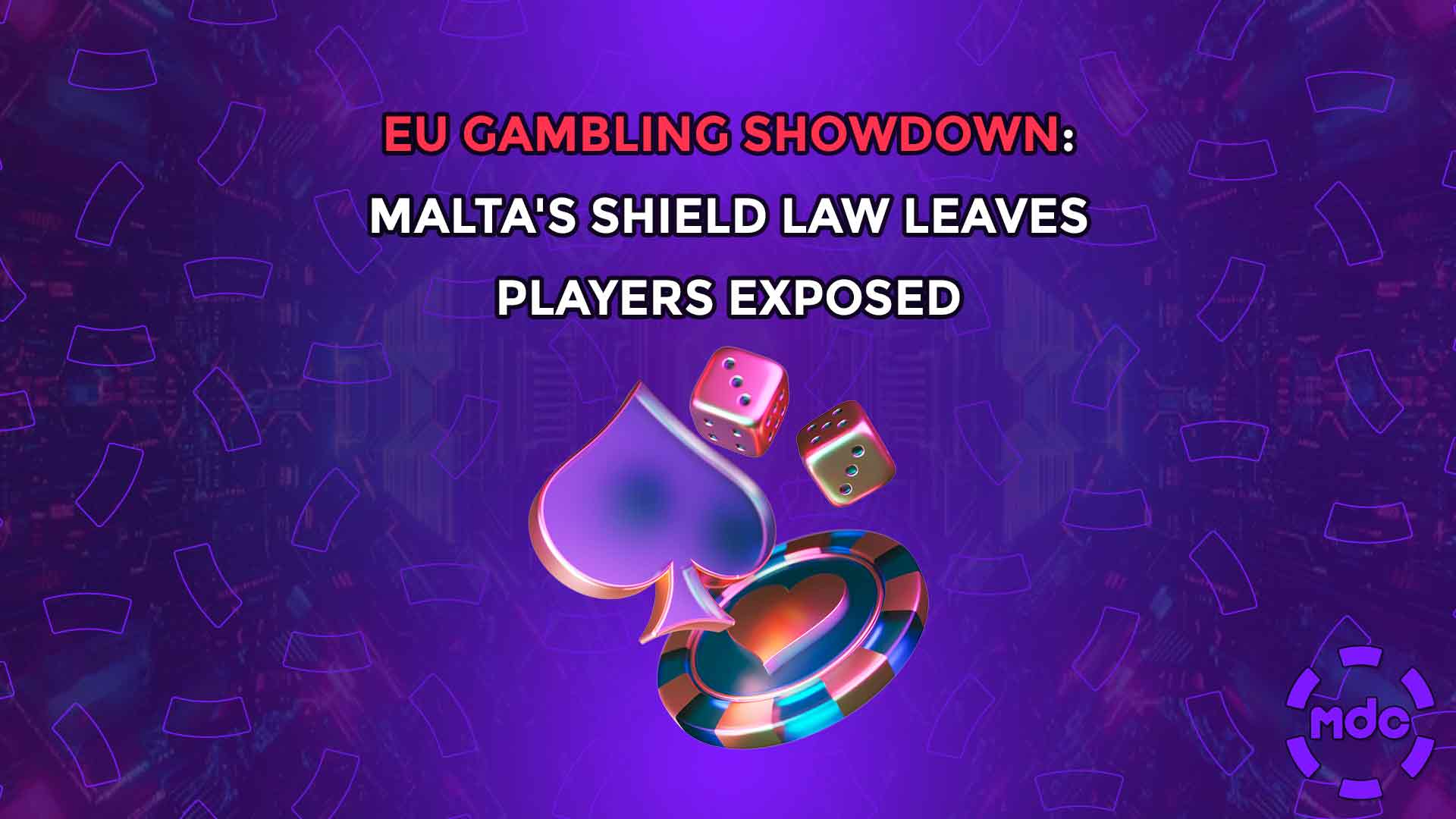
EU Gambling Showdown: Malta’s Shield Law Leaves Players Exposed
A quiet but furious legal battle has been brewing within the European Union for over two decades, one that directly impacts the wallets and rights of millions of online gamblers. At its core, this dispute pits national sovereignty and industry protection against consumer safeguards, with profound implications for anyone who plays online casino games across borders. The stakes are immense: the ability of players to reclaim significant losses from operators deemed unlawful in their home country.
This long-running saga primarily involves Austria, which fiercely defends its state gambling monopoly, and Malta, a hub for thousands of iGaming companies operating under its jurisdiction. The crux of the conflict lies in the fragmented nature of Europe’s gambling regulations, a patchwork of national laws rather than a harmonised EU framework. This lack of unity creates fertile ground for legal challenges, particularly when players from one country attempt to recover losses from an operator licensed in another.
Recent developments, including a landmark European Court of Justice (ECJ) ruling and a controversial new law in Malta, have escalated this conflict, bringing it to a critical juncture. For the average player, understanding these complex legal manoeuvres isn’t just an academic exercise; it’s essential for recognising where their protections stand, how their money is safeguarded, and whether justice can truly be served when disputes arise with offshore operators.
Unpacking the Legal Chess Match: Austria’s Monopoly Meets Malta’s Defence
At the heart of the dispute are Austrian players seeking to reclaim gambling losses from operators who provided services without a local Austrian license. Under Austrian law, contracts entered into with unlicensed gambling providers are often considered null and void. This legal principle allows players to pursue claims for “unlawful enrichment,” arguing that the operator illegally profited from their losses. Austrian courts have consistently upheld the state’s gambling monopoly, viewing it as a legitimate means to protect consumers and prevent addiction, even in the face of challenges to its proportionality under EU law.
The battle gained significant traction with a crucial ruling by the European Court of Justice (ECJ) in the Buna case, expected to take full effect in early 2026. This landmark decision clarified a critical point for cross-border disputes: the “place of damage” for determining applicable law is the player’s habitual residence. For Austrian claimants, this ruling is a massive victory, significantly strengthening their legal position by confirming that Austrian law, with its provisions for loss recovery, applies to them even when the operator is based elsewhere in the EU. It means that an Austrian player’s claim can be judged by an Austrian court, applying Austrian law, regardless of where the online casino holds its license.
However, Malta, a major iGaming jurisdiction, responded to this rising tide of foreign judgments with a drastic and highly controversial legislative move: the introduction of Article 56A (originally known as Bill 55) to its Gaming Act. This new law effectively prohibits the enforcement of foreign judgments against Malta-licensed operators and their directors if the activity in question is legal under Maltese law. In essence, Malta is attempting to shield its licensed companies from adverse rulings from other EU member states, directly challenging the principle of mutual recognition of judgments within the EU and raising serious questions about consumer redress.
Why This Legal Tangle Directly Impacts Your Wallet and Safety
Malta’s Article 56A isn’t just a dry legal technicality; it’s a direct blow to consumer protection and player recourse across the European Union. For players in countries like Austria, who have successfully navigated complex legal processes to secure judgments against unlicensed operators, this Maltese legislation threatens to render those victories hollow. Imagine winning a court case, only to find that the operator’s jurisdiction has passed a law specifically designed to block you from collecting your rightfully awarded funds. This scenario undermines the very foundation of justice and fair play.
The impact on a player’s wallet is immediate and severe. If a player in Austria, Germany, or another EU country loses a substantial sum to an operator licensed in Malta, and their national court rules that the operator was acting illegally without a local license, Article 56A could effectively prevent them from recovering their losses. This isn’t just about a few euros; these claims often involve tens of thousands, or even hundreds of thousands, of euros. The inability to enforce a legitimate judgment means players bear the full financial burden of what their own courts have deemed illegal activity. It essentially creates a safe haven for operators who might otherwise face significant financial penalties for operating outside national regulations.
Beyond direct financial losses, Article 56A creates significant uncertainty and confusion for consumers. It erodes trust in the cross-border legal system and complicates the process of seeking redress. Players are left in a legal limbo, potentially spending considerable time and money on litigation only to hit a jurisdictional brick wall. This environment discourages players from seeking justice and emboldens operators to operate in a gray area, knowing that a critical line of defense—the enforcement of foreign judgments—might be negated by a friendly jurisdiction. It signals a potential regression in player protection, where the financial and legal power of the industry is prioritised over the rights of individual consumers.
Broader Industry Reverberations and the CPA Conundrum
This escalating dispute between Austria and Malta highlights a fundamental flaw in the European Union’s regulatory architecture: the persistent lack of harmonization in the gambling sector. Unlike areas like banking or insurance, where common EU-wide frameworks exist, gambling remains largely at the discretion of individual member states. Each country maintains significant control over its gambling policy, driven by diverse national interests ranging from fiscal revenue and social policy concerns to specific approaches to player protection and problem gambling.
This jurisdictional tension creates a “catch-22” scenario. Without a unified EU gambling framework, member states like Malta and Austria are locked in a struggle, each vigorously defending their own regulatory regimes and economic interests. Malta, with its thriving iGaming industry, views Article 56A as a crucial defence of its economic sovereignty and its regulatory authority. From their perspective, their licensed operators are legitimate businesses adhering to robust Maltese standards, and they resist other nations attempting to impose their often more restrictive laws on these operations. This approach, however, directly clashes with the consumer protection principles upheld by other EU nations.
The conflict also underscores a critical challenge to the very spirit of the EU’s single market, particularly concerning the free movement of services and the mutual recognition of legal judgments. When one member state enacts legislation designed to circumvent the judgments of another, it creates friction that could have broader implications for inter-state cooperation and legal certainty across other sectors. It forces a conversation about whether the existing legal tools and diplomatic channels are sufficient to resolve disputes where national interests collide so sharply over consumer rights. The ongoing stalemate could act as a catalyst, pushing for greater clarity or even a move towards some level of harmonization to prevent such protectionist measures from undermining foundational EU principles.
The Bottom Line for Players: Navigating a Shifting Landscape
The long-standing legal battle between Austria and Malta, now intensified by the ECJ’s Buna ruling and Malta’s controversial Article 56A, represents a pivotal moment for consumer rights in the European iGaming landscape. It illustrates the ongoing struggle between national regulatory sovereignty and the fundamental need for consistent player protection across borders. While the ECJ’s ruling empowers players to seek redress under their national laws, Malta’s legislative response threatens to erect a formidable barrier to the enforcement of those judgments, leaving many players in a precarious position.
There is a glimmer of hope on the horizon for greater market clarity and improved player protection. Austria’s major gambling licenses are slated to expire by the end of 2027, which is prompting a public discussion about the potential shift towards a more open, yet robustly regulated, licensing regime. Models like Denmark’s, which combine strict licensing with a competitive market, are being considered. Such a move could significantly de-escalate these cross-border disputes by creating a legal environment where players naturally gravitate towards locally licensed and regulated operators, thereby diminishing the prevalence of “black market” disputes and the perceived need for defensive legislation like Malta’s Article 56A.
For players navigating this complex and evolving landscape, vigilance and informed decision-making are paramount. Here’s a quick cheat sheet for what you need to know and how to protect yourself:
- Prioritise Locally Licensed Operators: Whenever possible, choose online gambling sites that are explicitly licensed and regulated within your own country. These operators are bound by your national consumer protection laws, making redress significantly easier should a dispute arise.
- Understand Jurisdiction: Be aware that playing on sites licensed in jurisdictions like Malta, while legal in their home country, might complicate your ability to seek recourse if your own country deems their operation there illegal.
- Know Your Rights: Familiarise yourself with your national consumer protection laws regarding online gambling. Understand what constitutes an “illegal” operator in your jurisdiction and what avenues for loss recovery exist.
- Documentation is Key: Maintain meticulous records of your transactions, communications with operators, and any legal advice you receive. This documentation will be invaluable if you ever need to pursue a claim.
- Advocate for Harmonization: Support initiatives and discussions aimed at greater EU-wide harmonization of gambling regulations. A unified approach would offer clearer protection for all players and reduce these cross-border legal conflicts.
- Stay Informed: Follow developments in iGaming regulation and consumer protection. Laws and legal interpretations are constantly evolving, and staying informed can help you make safer choices.
Ultimately, while the legal battle continues to unfold, the onus remains on players to exercise caution and make informed choices to safeguard their funds and ensure their ability to seek justice in a fragmented regulatory environment. The industry and regulators alike have a responsibility to move towards a framework that truly puts consumer protection at its forefront, avoiding legal loopholes that can leave players financially vulnerable.
Latest Casino News