
Tag: Global
Global Region News
All the Latest News from around the Globe from the casino industry
German Rapper Fined Heavily for Promoting Illegal Online Gambling
It seems like everyone’s trying to get in on the online gambling action these days, but it’s crucial to know where you’re playing. Recently, a well-known German rapper, Capital Bra, found himself in hot water, facing a hefty €250,000 fine. Why? For promoting illegal online gambling.
What Exactly Happened?
Germany’s gambling regulator, the Joint Gambling Authority of the Länder (GGL), noticed that Capital Bra was repeatedly showcasing unlicensed gambling websites across his social media channels. This included livestreams, recorded videos, and even advertising links directing people to these unauthorized sites. Investigators first spotted this activity back in October 2025.
Why This Matters to You
This situation is a serious wake-up call for anyone who enjoys online gaming. It highlights the importance of sticking to licensed and regulated platforms. Here’s why:
The Dangers of Unlicensed Sites
Promoting illegal gambling is a big no-no in Germany, and for good reason. These unlicensed sites operate outside of any official oversight. This means:
- No Player Protection: If something goes wrong, like a dispute over winnings or issues with your account, you have no regulatory body to turn to for help.
- Addiction Risks: Unlicensed operators often don’t have the same responsible gambling measures in place, making it easier for people to fall into problematic gambling habits.
- Financial Losses: Without proper safeguards, there’s a higher risk of unfair practices, leading to potential financial losses.
- Weaker Security: Your personal and financial information might not be as secure on these sites compared to licensed ones.
The Regulator’s Stance
The GGL made it clear that even seemingly harmless content, like livestreams where someone is shown playing on these sites, can be considered illegal advertising. They are cracking down on anyone who tries to make illegal gambling look appealing or easy.
Beyond the Celebrities
The GGL isn’t just targeting the operators themselves. They’re now looking at public figures and influencers who use their reach to market these illegal products. The message is simple: if you’re promoting unlicensed gambling, you should expect consequences, regardless of how famous you are.
The Takeaway
This fine serves as a strong reminder that playing it safe is the best way to enjoy online gambling. Always ensure you’re using platforms that are licensed and regulated in your jurisdiction. This protects your money, your personal data, and your overall gaming experience. Don’t let flashy promotions from unlicensed sites lure you into a situation where you have little recourse if things go south.
Spinning into a Carnival of Chaos: Is Red Rascal Your Next Big Win?
Get ready for a wild ride! Hacksaw Gaming has dropped a new online slot that’s packing some serious punch, and it’s all about a spooky carnival. If you’re looking for a game that’s more than just spinning reels, “Red Rascal” might be your next obsession.
What Makes Red Rascal Stand Out?
This isn’t your average slot. Released on May 21, 2026, “Red Rascal” plunges you into a funhouse that’s a little bit creepy and a whole lot of fun. Think sinister clowns, demonic vibes, and a mascot that’s definitely up to no good. What’s cool is how they’ve blended cartoonish graphics with a gameplay that’s packed with features. You’ll be collecting symbols and unlocking different ways to win, which is exactly what we like to see – a game that keeps you guessing and rewards your efforts.
The Nitty-Gritty: How to Win Big
At its core, “Red Rascal” uses a 5×5 grid with 19 paylines. You can get in on the action with bets ranging from €0.10 up to €50 per spin, and if you’re feeling adventurous, you can crank it up to €250 with special feature modes. The symbols themselves are a mix of familiar card ranks and thematic icons like books, goats, and even flaming triple sixes. Landing five wild symbols can net you 20 times your stake – not too shabby!
The Rascal Respin Mode: Where the Magic Happens
The real excitement kicks off with the Rascal Respin Mode. Trigger this by landing at least three Rascal symbols, and they’ll stick around while you get more chances to spin. During this mode, only Rascal and Dead symbols will appear. The coolest part? If Rascal symbols form squares from 2×2 all the way up to 5×5, they combine into massive Colossal Rascal symbols. And if you manage to fill the entire 5×5 grid with one of these, you’re looking at the game’s top prize: a massive 15,000 times your bet!
The Pendulum Mechanic: A Twist of Fate
Once the respins end, a pendulum swings into action, deciding your fate between Coin Mode and Wild Mode. In Coin Mode, those Rascal symbols transform into prize coins worth anywhere from 0.20x to 500x your bet. Bigger Colossal Coins even get multipliers, adding another layer of potential wins. Wild Mode turns your Rascal symbols into sticky wilds, and Colossal Wilds get their own multipliers. Then, you get an extra spin with those wilds staying put. It’s a neat system that keeps you on your toes and can lead to some unexpected payouts.
Free Spins Galore: Multiple Ways to Trigger Bonuses
“Red Rascal” doesn’t skimp on free spins, offering three different bonus rounds triggered by scatter symbols. Ready to Riot gives you eight free spins with a better chance of landing those crucial Rascal symbols. After Dark, triggered by four scatters, starts you with 10 free spins and has a cool feature where un-triggered Rascal symbols are saved up to be added back to the reels on your final spin. Then there’s Ignite the Night, a hidden epic bonus requiring five scatters, which guarantees at least four Rascal symbols on every spin and activates the pendulum immediately.
Bonus Buy Options: Skip the Wait, Get Straight to the Action
If you’re not one for patience, “Red Rascal” offers Bonus Buy options. You can pay to increase your chances of hitting a free-spin bonus, guarantee Rascal symbols, or even jump straight into the Ready to Riot or After Dark features. This is fantastic for players who know what they like and want to dive right into the most exciting parts of the game.
Volatility and Returns: What You Need to Know
Hacksaw Gaming rates “Red Rascal” as having a volatility of 4 out of 5. This means you can expect some exciting wins, but they might not come around every single spin. The game also comes with several RTP (Return to Player) configurations, including 96.34%, 94.29%, 92.26%, and 86.35%. It’s always a good idea to check which RTP your chosen casino is offering to make sure you’re getting the best possible return on your wagers. “Red Rascal” is a high-energy slot that doesn’t shy away from bold themes and complex features. If you enjoy games with plenty of bonus rounds, unique mechanics, and the potential for big wins, this carnival-themed adventure is definitely worth checking out.
Navigating New UK Gambling Checks: What it Means for You
The UK’s Gambling Commission is pushing ahead with new Financial Risk Assessments (FRAs), a move that’s stirring up debate. While the commission assures that only a small number of bettors will be affected, some in the racing and betting industries are raising concerns.
What Exactly Are These New Checks?
These FRAs are being presented as distinct from traditional affordability checks. The aim, according to the commission, isn’t to cap your spending but to identify potential financial risks. They’ve indicated that in a pilot program, fewer than 3% of active accounts would trigger an assessment. The vast majority of these would likely pass through without any hiccups, with only a tiny fraction potentially facing difficulties.
Why the Fuss?
Despite these assurances, there’s significant opposition. Groups like the British Horseracing Authority and a number of Members of Parliament are worried. They argue that these checks could negatively impact the horseracing industry, which is a substantial contributor to the UK economy and a source of many jobs. Their concern is that the focus on spending alone might not accurately reflect a player’s situation, potentially flagging people who are simply enthusiastic bettors rather than those in genuine financial distress.
The Black Market Dilemma
A major point of contention is the potential for these new rules to push players towards unregulated, offshore gambling sites. There’s already a significant amount of money being staked with these operators, and the commission is investing heavily in combating this black market. They’re taking steps like issuing warnings, asking search engines to delist illegal sites, and using geo-blocking to shut down others. The worry is that overly strict checks could inadvertently encourage this trend.
Innovation vs. Regulation
The commission acknowledges that innovation within the licensed betting sector is important. They’re keen to hear ideas that could improve the customer experience. However, they also note that current regulations do place some limits on what’s possible.
What’s Next?
The Gambling Commission’s board is set to review the findings from the FRA pilot. A final decision on whether to implement these assessments is expected soon. In the meantime, the calls for a pause and further review from industry stakeholders and politicians continue. For those who enjoy a flutter, it’s worth staying informed about these changes and how they might affect your experience with online and offline betting.
What Entain’s Big Bet on Compliance Means for You
Thinking about a flutter? Whether you’re dreaming of the bright lights of Las Vegas or the high-stakes action in Macau, understanding how gambling operators handle your information and your well-being is crucial. Recently, a major player in the Australian online gambling scene, Entain Group, which operates Ladbrokes AU and Neds AU, found itself in hot water.
The BetStop Blunder
It turns out Entain had over 500 breaches related to Australia’s self-exclusion rules. What does this mean for you, the player? It means that individuals who had signed up for BetStop, a national register designed to help people self-exclude from gambling, weren’t always being properly excluded. Their accounts remained open, sometimes for over a year, even though they had actively chosen to take a break from gambling.
Why This Matters to Responsible Gamblers
This isn’t just about rule-breaking; it’s about trust and safety. The BetStop register is a vital tool for anyone who feels their gambling is becoming a problem. When operators fail to honour these self-exclusions, it undermines the system designed to protect vulnerable individuals. The investigation revealed that Entain’s systems didn’t always link all the accounts belonging to a self-excluded customer, meaning some accounts stayed active. Even worse, some individuals were allowed to open new accounts after they had registered for BetStop. This is a clear violation of the core principle of self-exclusion – that once you’ve made the decision to stop, there should be no easy way back in.
Beyond Self-Exclusion: A Wider Look
The ACMA, Australia’s communications and media authority, also found that Entain hadn’t done enough to promote BetStop to its customers through communications like texts and emails. For you, this means potentially not being aware of the tools available to help you manage your gambling responsibly.
The Outcome: A Long Road to Compliance
As a result of these findings, Entain has entered into a legally binding agreement. They’ll be undergoing an independent review of their systems and will have to implement any recommended improvements over the next 18 months. While no fines were issued this time, Entain faces serious consequences if they don’t stick to this agreement. This situation serves as a significant reminder of the importance of robust self-exclusion systems in the gambling industry. As regulatory bodies like the ACMA step up their scrutiny, it highlights the ongoing efforts to ensure that gambling operators are doing everything they can to protect their customers. For players, it’s a signal that while the thrill of the game is undeniable, the safety nets put in place to ensure responsible play are being taken more seriously.
Could Government Conspiracies Be Responsible For Surges In Online Gambling?
Our grocery bills get bigger weekly, along with rising fuel and food prices. Our collective sense of stability and hope for the future seems to be taking a dent. People’s savings are running out, and most don’t have a nest egg or investment plans.
Online gambling releases dopamine for an instant feel-good feeling. As the economy continues to dip, more online casino slots and table games fans change their luck. Could this surge in online gambling be more than just personal choice?
This article delves into the unsettling connection between macro-level global stress and micro-level betting habits. We’ll explore the psychological pivot from casual entertainment to desperate escape, examine the rising influence of prediction markets like Polymarket and Kalshi, and finally, unpack the provocative notion that these growing online gambling surges might, in a complex way, serve larger, less visible interests.
The Macro Environment: Systemic Inflation & The Gamification of Nihilism
The world feels fragmented. Ongoing conflicts continue to disrupt supply chains and trade routes. The Ukraine war has resulted in grain and fertilizer prices soaring. Tensions in the Middle East threaten oil flows and raise fears of broader disruption. These events feed systemic inflation that goes beyond a single €5/$5 jump in bread prices. They erode the basic promise that hard work and patience lead to security.
Housing costs remain high in many countries. Wages stagnate for many workers even as everyday expenses climb. Young people face student debt, and the job market feels unpredictable. The more traditional ways of making money, including a savings account, seem unachievable for many.
In this environment, the line between investing and gambling becomes increasingly blurred. Trading with Crypto and playing the stock markets can feel like sophisticated bets. When traditional pathways to financial stability crumble, the illusion of control offered by high-risk ventures – be it volatile crypto trading or online slots – becomes intoxicating. On global events, short-term, high-risk play becomes more appealing. Online casinos and sportsbooks also make it easy to play 24/7 on desktops or smartphones and mobile devices.
This erosion of traditional wealth pathways – stagnant wages, housing crises, crushing student debt – fosters a fertile ground for a widespread economic despair that can be described as the ‘gamification of nihilism’. When the “traditional rules” of the economy are broken, and the future appears increasingly out of one’s control, the idea of chasing quick, high-risk gains through digital platforms takes hold. The global online gambling market, valued at hundreds of billions annually, continues to expand rapidly, not despite economic pressures, but often because of them, as more individuals turn to digital alternatives when conventional systems fail.
The Psychological Pivot: From Leisure to Escape
People have always gambled for entertainment. A friendly sports bet or occasional casino visit provided excitement without dominating life. Today’s pattern differs as economic stress pushes many to gamble as an escape hatch from daily anxiety.
Stress triggers a search for relief. Placing a bet delivers a quick dopamine surge. It can feel empowering to watch a betting outcome unfold in a world of wars and inflation. Even if this is temporary, the feeling creates a dangerous feedback loop. Losses add financial pressure, which increases stress and then drives more betting in hopes of recovery.
Psychological research links financial hardship and uncertainty to higher gambling problems. People under chronic pressure often gamble to escape, dreaming of a sudden windfall. An anxious person feels powerless, then opens an app for a quick bet on sports or slots. Just a distraction to ease the stress, but data shows this thinking is a slippery slope.
Online Gambling as a High-Risk Coping Mechanism
In this climate of pervasive anxiety, online gambling transcends mere leisure; it transforms into an aggressive, high-risk coping mechanism — an “escape hatch” from economic despair. For a growing segment of the global population, digital betting platforms offer an alluring, albeit dangerous, psychological pivot.
The perceived relief is real but fleeting. A win brings euphoria and temporary hope. But losing your deposits brings despair and results in chasing wins. This is betting more to recover what was lost, and this soon spirals out of control. Regulated online casinos offer a responsible gambling section where players can limit their deposits and self-exclude.
This cycle harms mental health, relationships, and finances. Studies connect problem gambling with depression and other stress-related indicators. Accessibility makes it worse. Players can play on their smartphones, whenever and wherever they want.
Live dealer games, in-play betting, and themed slots create immersive experiences. This can blur reality. During economic downturns, online slots and table games offer a private and immediate escape.
The Rise of Prediction Markets: A New Frontier of Speculation
Traditional online gambling now shares space with prediction markets like Polymarket and Kalshi. These prediction market platforms let users bet on real-world events. It can be election outcomes, economic indicators, sports results, or even weather.
Unlike pure casino games based on chance, prediction markets blend speculation with information. They grew dramatically in recent years. Trading volumes surged, reaching billions monthly during high-interest periods like elections.
Prediction markets thrive in anxious times. When global events dominate headlines, people want to bet on the outcome, giving them a feeling of control.
Prediction markets contribute to the broader climate of speculation. They attract sophisticated users and casual ones alike. Their growth reflects eroded trust in traditional systems and a desire to ‘bet’ on the future rather than simply endure it. By offering markets on everything from political outcomes to scientific breakthroughs, these platforms inadvertently feed into the broader narrative of seeking quick gains or a sense of agency in an increasingly unpredictable world, blurring the lines between informed speculation and high-stakes gambling.
Connecting The Dots: The ‘Conspiracy’ Angle
Could governments or elite institutions play a role in these surges? This question deserves careful, non-sensational exploration rather than wild theories. Looking at this through the historical lens of the Roman concept of Panem et Circenses (also Bread and Circuses). It provides basic needs and entertainment, so there are no revolts by the masses.
Modern digital wagering could function similarly. Two angles stand out:
The Distraction Effect
When people focus on personal bets, their attention turns inward. Worry about the future is redirected into individual wins and losses, instead of collective action or public protest. Constantly checking on apps makes people less likely to organize around larger problems or demand systemic change. In a world fraught with macro-level anxieties, an individual’s preoccupation with personal gambles can effectively depoliticize widespread discontent.
The Revenue and Data Cycle
Many governments have been actively legalizing and regulating online gambling. This has been bringing in large amounts of tax revenue. In the US, states collect billions from sports betting and online gaming taxes. This creates a financial incentive.
Regulators also gain access to valuable data on spending habits and user behaviour. This is not necessarily the result of a hidden conspiracy. It’s a complex outcome of existing power structures. Legalisation protects consumer choice and reduces illegal gambling. It also makes high-risk behaviour more socially accepted. Some view it as a practical response to modern realities, but the truth is somewhere in between. Policies can both generate revenue and influence public mood, whether intentionally or not.
In a time of growing global uncertainty, does widespread digital gambling provide stability? Or does it create greater social harm? This, the key question, remains.
Conclusion: The Complex Interplay of Global Stress and Digital Habitats
Online gambling has grown due to many factors. These include economic instability, inflation, global uncertainty, technology, and human psychology. When life feels unstable, people often turn to systems that offer fast rewards or a sense of control. Online casinos, sports betting, and prediction apps fit this need. They turn uncertainty into entertainment.
Whether this is from intention or just overlapping incentives, the effect is similar. More people are spending time and money on digital betting as a form of escape.
As online gambling grows, the challenge for governments and individuals is the same. It’s about how to keep real choice and control in a world where betting is always one tap away.
So, is the surge in online gambling a top-down orchestrated conspiracy, a sophisticated digital “Bread and Circuses” designed to divert collective anxiety into individualistic pursuits? Or is it simply the natural, chaotic byproduct of a fragmented world, where digital platforms are merely filling a void left by eroded trust and financial security?
Ultimately, the result is the same: a society increasingly looking for salvation, or at least momentary relief, in a digital betting slip. This trend raises profound questions about human agency in an age of constant digital access and the urgent need for robust digital regulation that prioritizes public well-being over profit or pacification. The gamble continues, but the stakes for society might be higher than we realize.
The 2026 World Cup: A Betting Bonanza Awaits
Get ready, sports fans and betting enthusiasts! The 2026 FIFA World Cup, hosted across the United States, Canada, and Mexico, is shaping up to be a game-changer for global sports wagering. With the tournament expanding significantly, it means more matches, more opportunities, and potentially, more winnings for you.
More Games, More Bets
This isn’t your typical World Cup. The tournament is growing from 32 to a massive 48 teams, leading to over 100 matches. Experts are predicting a roughly 60% increase in games compared to the last World Cup. Think about what that means for betting: a whole lot more chances to place your bets and potentially cash in.
Bigger Stakes Expected
The 2022 World Cup saw global bets topping $35 billion, averaging about $500 million per match. If we see similar activity per game this time around, we could be looking at over $50 billion in total bets for the 2026 event. Plus, with popular betting options like same-game parlays and player proposition wagers gaining traction, the total betting pool could be even larger.
Legal Betting is Booming in the US
The legal sports betting scene in the U.S. has exploded since 2022. Back then, only about 40% of Americans had access to legal sports wagering. By the time the World Cup kicks off, that number is expected to jump to around 65%. This wider availability means more people can get in on the action, leading to greater participation and, you guessed it, more betting volume.
Who Stands to Benefit?
Companies with a strong international presence and solid online platforms are likely to see the biggest gains. Brands like FanDuel, Betfair, and PokerStars, which are part of Flutter Entertainment, are well-positioned, especially with a significant portion of their business in European markets. Other companies with operations in Latin America and countries participating in the tournament are also expected to benefit.
Beyond the Tournament
The excitement around a massive event like the World Cup often sparks lasting interest. Historical trends show that major tournaments can lead to sustained increases in account registrations, betting activity, and engagement with related online gaming products. It’s not just about the games themselves; it’s about the long-term growth in the betting industry.
International Reach is Key
This analysis highlights a key advantage for betting operators: international diversification. Companies with established brands in multiple regulated markets are better equipped to turn the temporary surge of World Cup excitement into enduring growth. As sportsbooks and online platforms get smarter with their promotions and betting products, the 2026 FIFA World Cup is poised to be a landmark event for the global betting landscape.
Top Betting Destinations Around the Globe
While the focus is on the World Cup, it’s worth remembering the incredible gambling hubs that exist worldwide. Macau continues to be a top-tier gaming destination, known for its high rollers, luxurious casinos, and rich heritage. Las Vegas, with its iconic casino resorts, offers endless entertainment, thrilling casino action, and dazzling lights. The Cotai Strip in Macau is a major player, boasting some of the biggest and newest casinos, challenging mainland Macau for gambling supremacy. The Philippines is an emerging force in Asian casinos, with multiple multi-billion-dollar operations ready for a casino tour. And let’s not forget Atlantic City, a place that inspired the Monopoly board, offering a wide array of casinos and poker rooms. These destinations, alongside the ever-evolving online betting platforms, provide a vast array of options for players looking to experience the thrill of the game.
Minnesota Moves to Ban Prediction Markets: What It Means for Your Betting Options
It looks like Minnesota is looking to take a hard stance against prediction market platforms like Kalshi and Polymarket. Lawmakers there have approved legislation that could make it the first state to explicitly ban these kinds of operations.
What’s the Big Deal About Prediction Markets?
So, what exactly are prediction markets? Think of them as places where people can bet on the outcome of future events. This can range from political elections and pop culture moments to sporting events and even natural disasters. The idea is that by allowing people to bet, you can get a real-time “wisdom of the crowd” prediction.
Why is Minnesota Banning Them?
The lawmakers pushing for this ban argue that these platforms are essentially operating like sportsbooks but without the same level of oversight, taxes, and consumer protections that traditional gambling is subject to. Representative Emma Greenman pointed out that other states, both Republican and Democrat, are also looking to regulate these markets to protect the public and their financial systems.
What Does the Ban Entail?
If Governor Tim Walz signs this bill into law, it won’t just be a slap on the wrist for these platforms. Hosting or advertising prediction markets in Minnesota could become a felony offence. This means that individuals involved in creating, managing, or facilitating these markets could face serious legal charges. The bill covers a wide range of event categories, so it’s a pretty comprehensive sweep.
Arguments Against the Ban
Not everyone is on board with this. Some lawmakers, like Representative Drew Roach, feel it’s government overreach. Others, like Representative Nolan West, believe that banning these activities won’t make them disappear but will simply push them underground, making them harder to track and potentially leading to more problems. He also raised concerns about Minnesota’s authority to regulate these markets and the potential for costly legal battles with the federal government.
The Federal vs. State Tug-of-War
This isn’t just a Minnesota issue; it’s part of a larger disagreement between states and prediction market companies about who gets to call the shots. Companies like Kalshi argue that they fall under federal law and are regulated by the Commodity Futures Trading Commission (CFTC). The CFTC has actually supported these companies in past court cases, challenging state attempts to restrict them. Minnesota’s approach is a bit different because it’s aiming for a direct law change, rather than just using existing regulations. This move could lead to legal challenges from either the federal government or the prediction market companies themselves.
What This Could Mean for You
For bettors and enthusiasts, this ban in Minnesota could mean one less place to explore these types of markets. It highlights the ongoing debate about how to categorise and regulate these emerging forms of betting. As this situation unfolds, it’s a good reminder to stay informed about where and how you can legally participate in different kinds of gambling and betting activities.
Tabcorp Under Scrutiny: What It Means for Australian Gamblers
Big news in the Australian gambling world. Tabcorp, a major player in the local betting scene, is currently facing a serious investigation by the Australian Transaction Reports and Analysis Centre (AUSTRAC). This is all about ensuring the company is doing its part to fight money laundering and terrorism financing.
Why This Investigation Matters to You
So, why should you, as someone who enjoys a punt, care about this? Well, it highlights the increasing focus on responsible gambling and financial integrity within the industry. When major operators like Tabcorp are under the microscope, it signals a drive for greater transparency and tighter controls across the board. AUSTRAC is looking into whether Tabcorp has adequately identified, managed, and mitigated the risks associated with money laundering and terrorism financing. This includes checking if their systems and processes for monitoring customer activity are up to scratch.
The Impact on Tabcorp and the Industry
This investigation has already had a significant impact on Tabcorp’s share price, showing how seriously the market takes these regulatory concerns. While Tabcorp executives have stated their commitment to cooperating with AUSTRAC and strengthening their compliance systems, the situation is still developing. It’s worth noting that this isn’t the first time Tabcorp has faced regulatory attention in this area. Past issues have resulted in substantial fines, underscoring the importance of robust anti-money laundering measures.
What This Could Mean for the Future
Ratings agency Fitch has indicated that while Tabcorp’s credit rating isn’t immediately affected, any enforcement action could lead to financial and governance pressures. This suggests that costs associated with compliance, legal fees, and potential penalties could rise for the company. This case is also part of a broader trend of increased regulatory scrutiny on Australian betting and casino operators. Other major companies have also been in AUSTRAC’s sights, indicating a sector-wide push for higher standards. Ultimately, this investigation serves as a reminder that the gambling industry operates under strict rules and that regulators are actively ensuring these rules are followed. For consumers, this means a continued focus on responsible practices and a more secure environment for your gambling activities.
What First Nations Leaders Want You to Know About Alberta’s Online Gambling Rollout
Alberta is gearing up for a significant shift in its gambling landscape with the launch of a regulated online market. While this means more options for players, it’s also raising some important questions, especially for Indigenous communities and the casinos they operate.
The New Digital Frontier
Starting July 13th, Alberta will officially allow private companies to offer sports betting and casino games online. The aim is to bring a large chunk of currently unregulated betting activity into a secure, official framework. The province is setting aside a portion of the revenue, specifically two percent of gross iGaming revenue, to go towards First Nations groups. This is being framed as a step towards economic reconciliation.
Concerns Over Community Impact
However, some First Nations leaders are expressing serious concerns. They worry that this move towards online gambling might not be enough to offset potential losses for Indigenous-owned casinos. These casinos are more than just entertainment venues; they are vital sources of funding for essential community programs. We’re talking about support for housing, education, healthcare, services for seniors, and various charitable causes. Leaders like Trevor Mercredi, grand chief of Treaty 8 First Nations, highlight the uncertainty many communities feel. While the idea of revenue sharing is acknowledged, the long-term impact on existing community programs remains a big question mark. The current proposal of two percent is being closely examined to see if it truly compensates for any dip in revenue from physical casinos.
Indigenous Operators Entering the Online Space
It’s not all about external companies, though. Some casino operators with ties to First Nations are also preparing to get involved in the online market. Companies like Pure Casino Entertainment Limited Partnership, backed by several First Nations, have registered to operate online. There’s also River Cree iGaming, seemingly connected to the River Cree Resort and Casino run by the Enoch Cree Nation. The hope is that these operations can potentially bridge the gap between their physical casino presence and new online offerings.
Lessons from Ontario
Alberta’s move mirrors what happened in Ontario, which opened its regulated iGaming market a couple of years ago. Ontario also has a revenue-sharing model with First Nations, though concerns and even legal actions have arisen there regarding consultation and the distribution of funds. This situation in Ontario is definitely on the radar for many in Alberta, adding to their calls for thorough discussion.
What’s Next?
As the July launch date approaches, the conversation around consultation, economic effects, and fair revenue sharing is set to continue. The key takeaway for consumers is that while the online gambling world is expanding, the impact on existing community structures is a significant part of the ongoing dialogue. It’s a complex situation, and ensuring that all parties have a voice in the process is crucial.
You Aren’t Always Getting the High RTP Slot Game Version at Your Favourite Casinos
When you play a slot game, you expect a fair and mathematically verified chance to win. Many players assume that a slot game has a single, fixed Return to Player (RTP) percentage, permanently set by its software developer. For instance, if NetEnt’s Starburst is widely known for its 96.09% RTP, it’s natural to assume this figure applies wherever you play the game. However, this is not always the case.
To understand why, let’s first clarify what RTP means. RTP is a theoretical percentage that indicates how much of all wagered money a slot machine will pay back to players over time. For example, if you wager $100 on a slot game with an established RTP of 96%, the game is mathematically designed to return $96 to players. It’s crucial to remember that this return is purely theoretical and is calculated over millions of spins; it’s a long-term average and does not guarantee short-term individual results. In a single session, you could win big or lose your entire bankroll.
The critical issue for modern online slot gaming is that, due to flexible software configurations, game studios now ship their most popular titles with variable RTP ranges. This means an online casino can choose whether to offer you the high, medium, or low payout version of the exact same slot game. A slight reduction in the base RTP—say, from 96% down to 91%—dramatically increases the casino’s house edge, causing your playing budget to drain far faster than you might expect.
In this comprehensive guide, we will pull back the curtain on variable RTPs, explain why casinos alter these settings, and show you exactly how to verify the real, active RTP on your screen before you spin, ensuring you’re always getting the best possible theoretical return.
Understanding RTP: The Foundation of Slot Gaming Returns
Before exploring how online casinos manipulate payout percentages, it is essential to establish a firm understanding of what Return to Player (RTP) actually means and how it influences your gameplay. At its core, RTP is the mathematical inverse of the house edge. If a slot game has a certified RTP of 97%, the house edge is exactly 3%. This means that over an infinite timeline of wagering, the casino expects to retain 3% of all action, while distributing the remaining 97% back to the betting pool in the form of line wins, bonus features, and progressive jackpots.
However, the most common mistake made by casual slot players is misunderstanding the relationship between RTP and short-term volatility. The theoretical RTP of a slot is calculated across a massive cycle of spins—often ranging from 10 million to 10 billion game rounds. This long-term scale is required to satisfy the Law of Large Numbers, ensuring that the random variations of the game’s Random Number Generator (RNG) eventually smooth out into the exact targeted percentage.
In a typical gaming session consisting of 500 or 1,000 spins, the actual return you experience will vary wildly from the theoretical RTP. You may hit a high-paying free spins round early on and experience an actual session return of 500%. Conversely, you might experience a long dry spell where your session return is closer to 30%. This variance is controlled by the slot’s volatility (or variance) rating. High-volatility slots pay out less frequently but offer larger maximum wins, while low-volatility slots offer frequent, smaller payouts.
Because of this high short-term volatility, many players fail to notice when a casino has quietly swapped a high-RTP version of a slot for a lower one. A player losing their bankroll on a 91% RTP game will simply chalk it up to “bad luck” or “high volatility,” unaware that the math of the game was heavily stacked against them from the very first spin. Over weeks, months, and thousands of spins, however, playing a downgraded RTP version will inevitably result in fewer winning sessions, shorter play times, and a rapidly depleting bankroll. This is why knowing how to verify the active RTP of your game is the single most important skill a modern slot player can possess.
How to Verify a Slot Game’s RTP: Your Step-by-Step Guide
When it comes to verifying the actual mathematical configuration of an online slot, you cannot rely on memory, marketing banners, or general review sites. You must learn how to audit the game in real time. Fortunately, regulatory compliance rules require casinos to make this information accessible, though it is often hidden behind layers of menus. Below is a step-by-step guide to finding the true, active RTP of any slot game, ordered from the most reliable method to secondary verification sources.
The Most Reliable Source: In-Game Information
The single most trustworthy, accurate, and legally binding source for a slot’s active RTP is the in-game help file or paytable screen. This file is loaded directly from the game provider’s servers alongside the game itself, meaning it must reflect the exact software version currently running on the casino’s platform. If a casino has selected a lower RTP build, the game provider is legally required to update the in-game help documentation to show that specific number.
To find this information, follow these steps when you load any online slot:
1. Open the Game: Launch the slot in either real-money or demo mode. The RTP configuration remains identical across both modes on licensed platforms.

2. Locate the Interface Menu: Look for the settings panel. This is usually represented by a gear icon, a hamburger menu (three horizontal lines), an “i” (information) button, or a question mark (?) icon located in the bottom corners of the game screen.

3. Differentiate Between Paytable and Help Rules: Do not just look at the standard paytable, which displays symbol payouts and bonus explanations. You need the comprehensive “Help” or “Game Rules” file, which typically opens in a separate browser window or a scrolling text overlay.
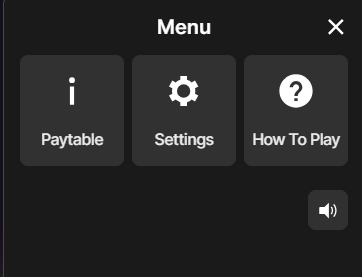
4. Search for the RTP: Scroll through the text or use your browser’s search function (Ctrl+F or Cmd+F) and type “RTP” or “Return to Player.”
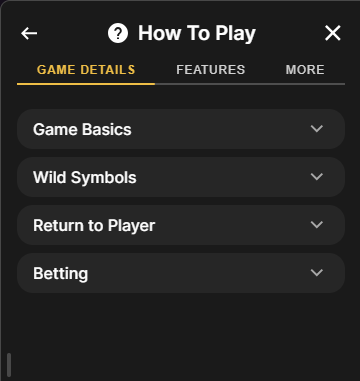
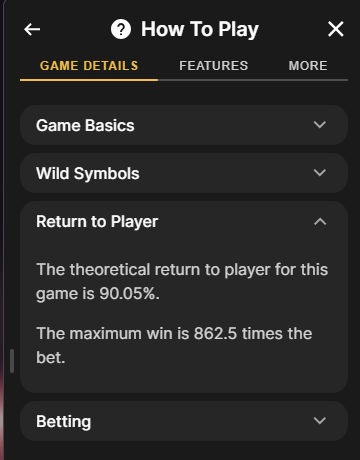
5. Verify the Percentage: You will find a sentence resembling: “The theoretical return to player for this game is 96.21%.” If you see a number like 94.20% or 91.15% instead of the advertised industry maximum, you are playing a downgraded version.
Consulting the Game Provider’s Official Page
If you want to know what the slot *should* be paying at its absolute peak performance, your next step is to visit the official website of the software developer who created the game. Major studios like NetEnt, Pragmatic Play, Play’n GO, and Relax Gaming host detailed game specification sheets for their entire portfolios.
On these developer portals, you can look up a game’s profile to find its maximum designed RTP, along with its volatility rating, hit frequency, and maximum win potential. While this page will show you the optimal configuration of the game, remember that it does not guarantee your chosen casino has purchased or installed the highest-paying version. It merely serves as your baseline benchmark. If the provider’s official page states that a slot has a maximum RTP of 96.50%, but your casino’s in-game help file lists 94.50%, you know immediately that the casino has selected a lower-tier build.
Trusting Third-Party Certifications and Databases
To maintain their operating licenses in highly regulated markets such as the United Kingdom, Malta, Gibraltar, and various North American states, online casinos must submit their games to independent, accredited testing laboratories. Renowned agencies such as eCOGRA (eCommerce Online Gaming Regulation and Assurance), GLI (Gaming Laboratories International), and iTech Labs perform rigorous audits of the random number generators and actual payout percentages of online casinos.
Many reputable casinos display the trust seals of these testing labs on their website footers. By clicking these logos, you can often view certified, real-world RTP audits for the casino’s entire game library over a specific month or quarter. Additionally, you can cross-reference slot statistics using reliable, independent gambling databases and slot review portals. However, always treat database listings as secondary indicators. If there is ever a discrepancy between a database, a review site, and your active in-game help file, the active in-game help file is the only figure that represents your current game session.
Why You Might Not Be Getting the High-RTP Version
Now that you know how to find the RTP of a slot, we must address the most pressing question: why does the same game exist in multiple versions? In the early days of online gambling, game developers designed a slot with a single, unalterable math profile. If a casino wanted to host a game, it had to accept the RTP set by the developer.
In recent years, however, the business model of online slot development has shifted dramatically. Under pressure from casino operators who wanted more control over their profit margins, game studios began developing and shipping their games with multiple RTP tiers. Today, when a studio launches a blockbuster slot, they do not just release one game file; they release a package containing several different RTP configurations.
For example, a premium slot might be delivered to casinos with five distinct options: a high option (~96.5%), a medium-high option (~94.5%), a medium option (~92.0%), a low option (~90.0%), and an ultra-low option (~88.0% or lower). The visual assets, the sounds, the bonus features, and the hit frequencies remain completely identical across all versions. The only thing that changes is the underlying mathematical distribution of payouts. The player cannot see or feel any difference in gameplay; the slot simply awards slightly fewer or smaller wins over time, allowing the casino to retain a larger share of the total wagers.
To illustrate just how widespread and significant these differences are, let us look at real-world examples from the industry’s most prominent game studios. The table below details the variable RTP ranges that popular slot games are shipped with, demonstrating how much value you could be losing depending on where you choose to play.
| Software Provider | Slot Game Title | Maximum RTP (High) | Medium RTP Tier | Low RTP Tier | Minimum RTP Tier |
|---|---|---|---|---|---|
| Play’n GO | Book of Dead | 96.21% | 94.25% | 91.25% | 87.25% / 84.25% |
| Pragmatic Play | Gates of Olympus | 96.50% | 95.51% | 94.50% | 89.51% |
| NetEnt | Starburst | 96.09% | 95.05% | 94.05% | 92.05% / 90.05% |
| Red Tiger Gaming | Gonzo’s Quest Megaways | 96.00% | 94.70% | 92.70% | 90.70% |
| Play’n GO | Reactoonz | 96.51% | 94.51% | 91.51% | 87.51% / 84.51% |
As the table clearly shows, the difference between the highest and lowest tiers is staggering. If you play Play’n GO’s iconic Book of Dead at a casino that uses the maximum 96.21% version, the house edge is a reasonable 3.79%. However, if you play the same game at a casino that has opted for the 87.25% version, the house edge climbs to 12.75%—more than triple the original rate! Your bankroll will deplete three times faster on the lower-tier version, resulting in a significantly degraded entertainment experience and virtually destroying your chances of walking away with a profit.
The Casino’s Choice: Why Lower RTP Versions Exist
It is easy to look at these variable RTP ranges and label casino operators as greedy. While profit-seeking is obviously a primary driver, the reality of the situation is more complex. The decision to run lower RTP versions of slots is often a direct response to the economic and regulatory realities of running a modern online casino.
Over the past decade, the global online gambling market has transitioned from a largely unregulated “Wild West” to a highly taxed, heavily regulated landscape. In countries like the United Kingdom, Sweden, Germany, and various states in the US and Canada, operators must pay high licensing fees, strict compliance penalties, and substantial point-of-consumption taxes. For example, Germany’s interstate treaty imposes a hefty 5.3% tax on every single slot wager (not just on net revenue). To survive in such low-margin environments, casinos must find ways to lower their operating costs and increase their hold. Adjusting slot RTPs down to 90% or 92% is one of the most effective levers they have to offset these local tax burdens.
Furthermore, running an online casino involves massive overhead costs. Operators must pay high platform fees to game aggregators, pay substantial royalties to game developers, fund expensive marketing campaigns to acquire new customers, and cover transaction processing fees for deposits and withdrawals. When an online casino offers lucrative welcome packages, such as 100% deposit matches or hundreds of free spins, they are taking on a massive upfront financial risk. To recoup these promotional costs, many casinos quietly lower the RTPs of their slot libraries, effectively shifting the cost of their “free” bonuses back onto their regular players over the long run.
Taking Control: How to Always Find the Best RTP
As a player, you are not powerless in this situation. The key to protecting your bankroll is to adopt a proactive, defensive playing style. By shifting your approach from passive entertainment to informed consumer choice, you can ensure that you only play slots when they are configured to deliver their maximum possible return.
Here is a checklist of actionable steps you should take every time you play:
- Develop the “Audit Habit”: Never assume a slot is set to its default RTP. Make it a strict habit to open the game rules file and check the percentage before placing your very first bet. This audit takes less than thirty seconds but can save you hundreds of dollars.
- Vote with Your Wallet: If you perform an audit and discover that your favourite casino is running a downgraded version of a game (for example, a 91% version of Book of Dead), immediately close the game and log out of the casino. There are thousands of reputable online casinos; you do not have to accept unfair math.
- Keep a List of “High-RTP Casinos”: When you find an online casino that reliably runs the maximum RTP versions of popular games, add them to your preferred list. Many top-tier casinos use maximum RTPs as a selling point to attract smart, high-value players. These are the platforms that deserve your business.
- Be Skeptical of Excessive Bonuses: If a casino is offering a bonus that seems too good to be true, check their slot RTPs. Quite often, casinos that offer massive, low-wagering bonuses offset their losses by lowering the RTPs on their entire slot catalogue. Always read the fine print and audit the games.
- Consult Minimum Deposit Casinos (MDC): Use reputable, expert portal sites like Minimum Deposit Casinos to find comprehensive reviews of licensed operators. MDC reviews assess casinos on their licensing, terms, and the overall fairness and transparency of their gaming libraries, helping you avoid platforms that use predatory, low-RTP game configurations.
Conclusion: Play Smart, Play Informed
The landscape of online slot gaming has changed permanently. The era of uniform, standardised game payouts is gone, replaced by a dynamic system where casinos can adjust the math of their games to suit their own financial needs. While this system presents a challenge for players, it also provides an opportunity for those who are willing to do a little research.
By understanding what RTP is, acknowledging the existence of variable RTP tiers, and knowing how to locate the real, active payout percentage in a game’s help files, you can protect yourself from unfair setups. Do not let online casinos quietly erode your bankroll. Take control of your gaming experience, verify every game before you play, and always demand the highest possible return for your money. Play smart, play informed, and make sure every spin counts.