
Category: Payment Options
How Digital Payments have Reshaped how players Deposit and Withdraw from Casinos
The landscape of online gambling has undergone a seismic shift over the last decade, driven primarily by the rapid evolution of digital payment technologies. Gone are the days of manual bank wires, multi-day processing windows, and the anxiety of waiting for funds to clear before participating in a gaming session. Today, the integration of cutting-edge financial technology has fundamentally altered the interaction between players and online casinos. By prioritising speed, convenience, accessibility, and robust security, digital payment solutions have transitioned from a simple utility to a cornerstone of the modern iGaming experience.
As players become increasingly accustomed to the “one-click” culture found in mainstream e-commerce, their expectations for online casinos have risen in tandem. Whether it is the instant nature of e-wallets, the anonymity of prepaid vouchers, or the global reach of cryptocurrencies, digital payments have removed the friction that once defined the industry. This article explores how these innovations have reshaped the player journey, turning deposit and withdrawal processes into seamless, secure, and highly efficient parts of the entertainment experience.
Accelerated Transactions: Setting a New Benchmark for Speed
In the early days of online gambling, transaction latency was a persistent pain point. Players would often endure a “waiting game” that lasted several business days, leading to frustration and disengagement. Digital payment innovations have effectively eliminated these bottlenecks, establishing near-instant deposits and rapid withdrawals as the industry benchmark.
The transition from traditional banking—which relied on legacy clearing systems—to real-time payment rails has transformed how players manage their bankrolls. Today, when a player hits “deposit,” the funds are typically available in their casino account within seconds, allowing for immediate gameplay. Conversely, the withdrawal process, once the most tedious aspect of online gaming, has seen dramatic improvements. Advanced automated payout systems now verify and approve transactions in a fraction of the time previously required. This shift has fundamentally altered player expectations; speed is no longer just a bonus, but a primary requirement for any reputable platform. Casinos that fail to offer near-instant transaction capabilities are quickly finding themselves at a competitive disadvantage, as players now demand the same agility from their gambling sites as they do from their primary banking applications.
Expanding Horizons: A Plethora of Payment Options
The diversification of payment methods is perhaps the most visible change in the digital gaming ecosystem. Modern casinos understand that a “one-size-fits-all” approach to banking is ineffective in a global market where financial habits and infrastructure vary wildly from one region to another. Consequently, operators have embraced a wide array of payment options to cater to diverse player preferences.
Today’s players are empowered to choose from an extensive menu of financial tools, including:
- Credit and Debit Cards: Providing the familiarity and convenience of standard banking.
- E-wallets: Offering a buffer between the player’s personal bank account and the casino, while facilitating lightning-fast transfers.
- Instant Bank Transfers: Leveraging Open Banking technology to move funds directly without traditional delays.
- Prepaid Vouchers: Ideal for players who prioritise anonymity and want strict control over their spending.
- Cryptocurrency: Providing a borderless, decentralised method for transactions that often avoids traditional banking fees and oversight.
This variety is not merely about convenience; it is about accessibility. By offering tailored solutions, casinos allow players to engage with their preferred games using methods that align with their specific security concerns, budgetary habits, and geographic availability, ensuring that no player is excluded due to outdated banking limitations.
Streamlined Interactions: The Seamless User Experience
The integration of payment gateways directly into the casino software has replaced clunky, multi-step processes with intuitive, streamlined interactions. In the past, depositing often meant navigating away from the game, entering complex banking details, and waiting for redirects. Modern platforms have adopted a “frictionless” design philosophy, where the cashier is integrated into the casino interface itself.
By leveraging features such as saved payment methods, biometric authentication, and one-tap deposits, platforms have reduced players’ cognitive load. This fluidity is essential; it ensures that the momentum of the gaming experience is not interrupted by administrative hurdles. When a player’s bankroll runs low, they can now top up their balance without ever leaving the game screen, thanks to pop-up banking modules and simplified checkout flows. This technological integration does more than just save time; it creates a psychological environment where the gaming experience feels continuous and immersive. By minimising the distance between the player’s intent and the act of funding their account, casinos have made the administrative side of gambling feel almost invisible, allowing the player to remain focused on the platform’s entertainment value.
Fortifying Trust: Enhanced Security Measures
As the frequency and volume of digital transactions in the iGaming sector have grown, so too has the focus on security. The digitisation of payments has enabled the implementation of highly sophisticated security layers that were previously impossible to maintain with manual processes. Players today are significantly more confident in depositing large sums online because of these advancements.
Robust security is built on three main pillars:
- Fraud Detection Systems: AI-driven tools monitor transaction patterns in real-time, identifying and flagging suspicious activity before a loss occurs.
- KYC (Know Your Customer) Protocols: Automated identity verification ensures that financial transactions are tied to verified accounts, reducing the risk of identity theft.
- AML (Anti-Money Laundering) Measures: Stringent compliance protocols ensure that all funds moving through the platform are monitored, protecting the ecosystem from illicit activity.
These measures are not just for the protection of the operator; they build a foundation of trust for the player. Knowing that their financial data is encrypted and that the platform adheres to rigorous international security standards, players feel comfortable using modern digital payment systems. The shift from vulnerable, manual payment handling to secure, automated digital channels has been a defining factor in the mainstream adoption of online gambling.
Evolving Expectations: The Modern Player’s Perspective
The cumulative effect of these digital payment innovations is a total shift in player behaviour. The modern gambler has been conditioned by the efficiency of the digital age to expect speed, mobility, and transparency as standard features. They expect to be able to deposit on the go, request withdrawals at any hour, and use mobile-friendly interfaces that work seamlessly on smartphones and tablets.
These elevated expectations directly influence which casinos players choose to join. A platform’s banking section is now often treated with as much scrutiny as its game library or bonus offers. Players are increasingly likely to abandon a casino if the payment process feels archaic or if the withdrawal times are perceived as excessive. This has forced the entire industry to adopt a “customer-first” approach to financial services. As a result, gambling platforms have moved away from being simple game providers and have become sophisticated, tech-forward services where the ease of financial movement is just as important as the quality of the gameplay itself. Today’s player is more informed, more demanding, and more reliant on technology than ever before.
The Future of Digital Payments in Online Casinos
Digital payments have fundamentally reshaped the online casino landscape, transforming banking from a functional necessity into a strategic advantage. By enabling near-instant transactions, providing a wide array of choices, and fortifying security through advanced encryption and verification, these technologies have lowered the barrier to entry and increased player satisfaction. Online gambling is no longer just about the games; it is about the entire experience—from the first deposit to the final withdrawal. As digital finance continues to evolve, we can expect even more innovation, ensuring that interactions between players and platforms remain secure, effortless, and perfectly suited to the modern world.
PayPal might just be the key factor for minimum deposits at NZ Casinos in 2027
The landscape of online gambling in New Zealand is on the brink of a massive transformation. For years, Kiwi players have enjoyed a highly accessible, albeit grey, offshore market where micro-deposits of $1 have reigned supreme. However, as we look forward to 2027, the impending introduction of a local regulatory framework is set to change the rules of the game. At the heart of this evolution is a payment giant that has historically kept its distance from the New Zealand iGaming scene: PayPal. Known globally for its unmatched security, lightning-fast transaction speeds, and immense consumer trust, PayPal is poised to enter the New Zealand online casino market. But this entry comes with a twist. Far from maintaining the status quo of ultra-low $1 limits, PayPal’s operational fee structure and compliance demands are likely to redefine budget play, making a $2 deposit or $5 deposit the new undisputed kings of the local casino market.
The Changing Regulatory Landscape for Online Casinos in New Zealand
To understand why PayPal has been largely absent from Kiwi-facing online casinos, one must look at the current legal framework. Under the Gambling Act 2003, it is illegal for domestic companies to operate online casinos within New Zealand, with the exceptions of Lotto NZ and the TAB. However, there is no law preventing New Zealanders from signing up and wagering at offshore online casinos. This regulatory loophole created a booming, unregulated market where international operators could offer services to Kiwis without paying local taxes, contributing to harm minimisation initiatives, or adhering to strict local consumer protection standards.
Because of this “grey market” status, major financial institutions and payment gateways like PayPal have taken a conservative stance. PayPal operates under a strict global policy that restricts its payment processing services for gambling activities in jurisdictions without a local licensing regime. To protect its reputation and avoid regulatory penalties, PayPal has prioritised locally regulated, white-market jurisdictions, such as the United Kingdom, Sweden, and several states in the US. Consequently, Kiwi players wanting to fund their casino accounts have had to rely on alternative methods, including e-wallets like Skrill and Neteller, prepaid vouchers like Paysafecard, or direct credit card transfers.
However, change is on the horizon. The New Zealand Government, spearheaded by the Department of Internal Affairs (DIA), is actively working on a pending licensing framework for online casinos, which is expected to be fully implemented by 2026 or early 2027. Under this proposed system:
- Offshore operators must apply for a local New Zealand gambling licence to legalise their services.
- Licensed operators will be subject to local corporate tax and a dedicated consumption tax on gambling revenue.
- Strict player protection measures, including mandatory self-exclusion registries and spending limits, will be enforced.
- Only locally approved and licensed payment systems will be permitted to process transactions.
This pending regulation is the exact catalyst needed for PayPal to enter the market. Once New Zealand establishes a clear, regulated, and licensed environment, PayPal can safely offer its services to compliant operators. This regulatory shift will not only legalise and secure the market but will also completely reorganise the payment options available to New Zealand players.
PayPal’s Anticipated Entry and Its Operational Impact on NZ Casinos
When PayPal inevitably launches as a primary payment method for licensed New Zealand online casinos in 2027, the operational impact will be immediate. From a player perspective, the benefits of PayPal are undeniable. It offers a level of convenience and security that few other payment processors can match. Players do not have to share sensitive banking details or credit card numbers directly with the casino; they simply log in to their PayPal account, approve the transaction, and the funds are instantly available. Additionally, PayPal is renowned for its swift withdrawal processing times, often returning funds to a player’s wallet within minutes of casino approval.
However, from an operator’s operational and financial standpoint, integrating PayPal is a complex equation. Unlike some niche payment options, PayPal holds substantial bargaining power, which is reflected in its merchant fee structure. For every transaction processed, PayPal charges the merchant (in this case, the online casino) a combination of a percentage-based fee and a fixed transaction fee. This fixed fee—typically ranging from $0.30 to $0.45 per transaction—presents a major roadblock for low minimum deposit limits.
Consider the math behind a $1 deposit at an online casino using PayPal:
- The Player’s Deposit: $1.00
- PayPal’s Fixed Merchant Fee: ~$0.30 to $0.45
- PayPal’s Percentage Fee (e.g., 2.9%): ~$0.03
- Total Processing Cost: ~$0.33 to $0.48
- Remaining Value for the Casino: $0.52 to $0.67
When you factor in additional overheads, such as game licensing fees, customer support, data hosting, and the newly proposed New Zealand taxes, a $1 deposit processed via PayPal becomes a loss-making transaction for the casino. To mitigate these transaction costs and protect their profit margins, online casino operators will be forced to adjust their deposit boundaries.
This is where the hypothesis of higher minimum deposit requirements comes into play. To make PayPal integration financially viable, casinos must set higher baseline limits. While a $1 limit is unsustainable under PayPal’s pricing model, a $2 or $5 deposit amortises the fixed fee significantly. For instance, on a $5 deposit, a processing fee of $0.45 represents only 9% of the total value, a ratio that operators can comfortably absorb as a player acquisition cost. Thus, PayPal’s entry will serve as a natural economic lever, raising the minimum deposit bar across the industry.
The Future of Minimum Deposits: Could $2 or $5 Become the New Standard?
If PayPal’s entry forces the market to adjust, we are likely to see a major shift in the definition of “budget play” in New Zealand. The era of the $1 deposit casino, while incredibly popular, has always had its drawbacks. Historically, $1 deposits have been highly restrictive. They are rarely eligible for lucrative welcome bonuses; they limit players to only a handful of spins on highly volatile progressive jackpot slots; and they often carry high wagering requirements that make withdrawing winnings incredibly difficult.
A shift toward a $2 or $5 minimum deposit standard, powered by PayPal, actually benefits both players and operators. Here is how this transition will reshape the market:
For the Budget-Conscious Kiwi Player
While some players might initially miss the ultra-low $1 entry point, a $2 or $5 minimum deposit is still highly affordable. Crucially, a $5 deposit unlocks significantly more value. Many casinos are willing to offer generous welcome matches or free spin bundles for a $5 deposit, which they simply could not afford to do for a $1 deposit. Furthermore, a $5 bankroll gives players more flexibility to explore different games, try out table games like blackjack or roulette with lower minimum stakes, and experience a longer, more satisfying gaming session.
For the Casino Operators
The standardisation of $2 and $5 limits allows casinos to run more sustainable marketing campaigns. Instead of targeting low-value players who deposit $1 once and never return, operators can target “casual value” players. By offering PayPal as a deposit method, casinos can leverage the payment provider’s stellar reputation to attract players who were previously hesitant to share their credit card details with online gambling platforms. The high conversion rate associated with PayPal’s one-touch payment system will easily offset the slightly higher entry barrier for players.
The Competitive Response from Alternative Payment Methods
The rise of PayPal as the new standard-bearer will undoubtedly force other payment providers to adapt. Prepaid card options like Paysafecard, which have traditionally been the go-to for $1 and $5 deposits, may have to lower their merchant fees to remain competitive. Similarly, bank transfer systems like Poli or Akahu, which are highly popular in New Zealand, will need to innovate their mobile experiences to match PayPal’s seamless user flow. This healthy competition will ultimately drive better service, lower transaction fees, and higher security standards across all payment channels in the NZ gaming space.
PayPal’s Pivotal Role in Shaping NZ Casino Deposits in 2027
By the time 2027 arrives, the New Zealand online casino landscape will look vastly different from the unregulated frontier of the past. The introduction of local licensing will bring much-needed structure, security, and consumer protection to Kiwi players. Within this new regulatory framework, PayPal is destined to play a pivotal role. As the preferred payment method for millions of New Zealanders for everyday online shopping, it is highly anticipated to enter the local online casino market.
However, this transition will rewrite the economics of minimum deposit casinos. While the market may bid farewell to the unsustainable $1 deposit, the rise of $2 and $5 deposit limits will mark the dawn of a more mature, reliable, and rewarding ecosystem. Backed by PayPal’s secure infrastructure and swift payout speeds, Kiwi players will enjoy a superior gaming experience that balances budget-friendly play with genuine value. For operators, the ability to offer a trusted household name like PayPal will build unprecedented brand loyalty. Ultimately, PayPal’s integration is not just a technological upgrade; it is the catalyst that will establish $2 and $5 deposits as the undisputed kings of the New Zealand online casino market in 2027 and beyond.
We Tested Every UK Payment Method with a £1 Deposit
For budget-conscious players in the United Kingdom, the appeal of a £1 deposit casino is undeniable. The ability to fund an online casino account with just a single pound coin allows players to test a platform’s user interface, explore its game lobby, and even claim bespoke low-deposit bonuses without committing significant capital. However, finding a UK online casino that accepts a £1 deposit is only half the battle. The far more challenging obstacle is finding a payment gateway that actually processes such micro-transactions.
In the UK gambling landscape, payment processing is highly regulated and commercially complex. Behind every transaction is a network of payment processors, merchant banks, and gateway providers, all of which charge the online casino operator a fee. When a deposit is as small as £1, these transaction fees can easily swallow the entire deposit amount, leaving the operator out of pocket. Consequently, many payment methods enforce strict minimum limits that override the casino’s own promotional offers.
To cut through the marketing noise and provide clear, reliable advice, we decided to conduct a comprehensive hands-on test. We funded real-money accounts at multiple UK-licensed online casinos, testing every major domestic payment method with exactly £1. The objective of this article is to share our first-hand findings, revealing which payment methods successfully processed our £1 deposits, and, more importantly, which popular methods failed. This guide will save you time, prevent unnecessary frustration, and help you get the most out of your low-budget gaming sessions.
Our Approach to Testing UK £1 Deposit Methods
To ensure our findings were accurate, objective, and legally compliant, our testing methodology was rigorous and practical. We did not rely on outdated terms-and-conditions pages or customer support chat transcripts, which are frequently inaccurate regarding micro-deposits. Instead, our team of UK-based casino experts set up real-money accounts at active UK Gambling Commission (UKGC) licensed casinos known for supporting low-budget play.
We loaded each payment method with British Pounds Sterling (£) and attempted to complete manual deposits of exactly £1. During this process, we evaluated several core performance indicators:
- Transaction Success Rate: Did the payment method allow the £1 transaction to go through, or did it trigger an automatic error message indicating a higher minimum threshold?
- Processing Speeds: Did the successful £1 deposits land in our casino accounts instantly, or was there a delay due to manual verification processes?
- Additional Fees: Were there any hidden processing fees deducted by the payment provider or the casino that reduced our playable balance below £1?
- Mobile Compatibility: How seamlessly did these payment options function when executed on iOS and Android mobile devices?
By executing these live transactions, we compiled an authentic, real-world database of which payment gateways truly support the ultra-low-deposit niche in the UK market.
Payment Methods That Accept a £1 Deposit in the UK
Our hands-on testing successfully identified several highly reliable payment methods that processed our £1 deposits instantly and without any transaction fees. These methods are widely available to UK players and leverage advanced digital infrastructure to make micro-deposits commercially viable for both players and casino operators.
If you want to play with a single pound, we recommend focusing your attention exclusively on the successful payment methods detailed below.
Debit Cards: Visa and Mastercard
During our testing, standard UK debit cards—specifically those issued by Visa and Mastercard—emerged as the most consistent and reliable tools for making £1 deposits. Because debit cards are linked directly to your UK bank account, they do not require a secondary intermediary platform, keeping transactional friction to an absolute minimum.
It is crucial to emphasise that only debit cards are accepted. Under UKGC regulations introduced in April 2020, the use of credit cards for any form of gambling is strictly prohibited in Great Britain. Therefore, credit cards like Visa Credit or Mastercard Credit will be rejected immediately at the cashier.
Our testing confirmed that depositing £1 via a Visa or Mastercard debit card is incredibly straightforward. The transactions were processed instantly, and the full £1 balance appeared in our casino accounts without any deductions. Furthermore, because these cards are backed by robust security protocols like Verified by Visa and Mastercard ID Check (3D Secure), the transactions were highly secure, often requiring a quick biometric approval via our mobile banking apps. For widespread availability and ease of use, debit cards remain the gold standard for UK low-deposit players.
Digital Wallets: Apple Pay and GPay
For players who prefer mobile gaming, Apple Pay (iOS users) and Google Pay (Android users) proved exceptionally efficient for £1 deposits. These mobile wallets act as secure digital wrappers for your existing debit cards, allowing you to authorise transactions using your smartphone’s built-in security features.
When testing Apple Pay and GPay with a £1 deposit, we experienced flawless integration. Because these wallets bypass the need to manually enter a 16-digit card number, expiry date, and CVV code, the deposit process took less than 5 seconds. We simply selected the option at the cashier, confirmed the £1 amount, and authorised the payment using Face ID, Touch ID, or a secure passcode.
From a commercial perspective, Apple Pay and GPay are highly favoured by modern UK online casinos. Because they utilise tokenisation—replacing sensitive card details with a unique, single-use token—the risk of fraud is drastically reduced. This lower risk profile translates to lower transactional overheads, meaning casinos are much more willing to accept a £1 deposit through these mobile wallets than through traditional, manual web forms.
Direct Transfers: Instant Bank Transfer
Instant Bank Transfers, often powered by Open Banking technology, have revolutionised the way UK consumers interact with their online casino cashiers. Unlike old-fashioned bank wires, which could take days to clear, modern Instant Bank Transfers route funds directly from your personal bank account to the casino’s merchant account in real time.
During our testing, Instant Bank Transfer was a standout performer for £1 deposits. By utilising secure APIs, the casino cashier redirected us to our secure mobile banking application (such as Barclays, Lloyds, NatWest, or HSBC). Once inside our banking app, we authorised the pre-filled £1 transfer with a simple fingerprint scan or password, and were immediately redirected back to the casino, where the funds were already waiting for us.
Because Open Banking transfers bypass traditional card networks entirely, they incur virtually zero flat-rate processing fees for the casino operator. Instead, they are typically charged as a microscopic percentage of the transaction value. This makes Instant Bank Transfer one of the most cost-effective methods for online casinos to support, ensuring that a £1 deposit is processed quickly, securely, and without any hidden administrative costs.
Payment Methods That Do Not Accept a £1 Deposit in the UK
While discovering what works is highly beneficial, knowing which payment methods do not support £1 deposits is arguably more important for avoiding wasted effort and failed transactions. Despite their massive popularity in the broader e-commerce and digital gaming sectors, several household-name payment services flatly refused to process our £1 deposits during our live testing.
Understanding the technical and commercial limitations of these methods will prevent you from signing up to a casino only to find your preferred payment gateway blocked for low-value transactions.
Popular E-wallets: PayPal and Paysafecard
PayPal is one of the most trusted and widely used e-wallets in the United Kingdom, renowned for its speed and user-friendly interface. However, when we attempted to use PayPal for a £1 deposit, we were consistently blocked. PayPal operates on a fixed-fee merchant pricing model. For every transaction processed, PayPal charges the merchant (the casino) a fixed fee (often around 30p) plus a percentage of the total transaction value. If a casino were to accept a £1 deposit via PayPal, nearly half of that pound would be consumed by PayPal’s transaction fees. To protect their profit margins, UK casinos almost universally set a minimum deposit limit of £10 for PayPal transactions.
Similarly, Paysafecard—a popular prepaid voucher system—proved entirely unsuitable for £1 deposits. Paysafecard is purchased at local retail outlets (such as PayPoint locations) or online in fixed denominations. In the UK, the minimum voucher value you can purchase is £10. While you can technically spend a fraction of a voucher, the Paysafecard infrastructure and the high distribution fees associated with prepaid cards mean that UK casinos do not support £1 deposit transactions via this method. If you wish to use Paysafecard, you must be prepared to make a minimum deposit of at least £10.
Alternative Banking Options: Trustly and Pay by Phone
Trustly is an online banking processor that has gained massive traction across European online casinos, particularly due to its involvement in “No Registration” casino models. However, in our tests at UK-licensed casinos, Trustly failed to facilitate £1 deposits. Trustly’s corporate billing structure and gateway integration agreements typically mandate a strict minimum deposit limit of £10 or £20. The brand positions itself as a premium, high-volume bank transfer solution, and its fee structure reflects this, making micro-transactions economically unviable for operators.
Finally, we tested “Pay by Phone” options, which allow players to charge their casino deposits directly to their monthly mobile phone bill or deduct them from their pay-as-you-go credit. In the UK, this service is commonly powered by providers like Boku or Siru Mobile. While highly convenient, Pay by Phone is notorious for carrying the highest transaction fees in the entire gambling industry. Mobile network operators (such as EE, Vodafone, O2, and Three) often demand a commission of up to 15% to 30% on these transactions. Consequently, casinos cannot afford to process £1 deposits via Boku; the minimum threshold is almost always locked at £10, often accompanied by an additional processing fee charged directly to the player.
Understanding Minimum Deposit Limitations and Our Verdict
To help you quickly visualise our testing results, we have compiled our findings into a straightforward comparison table. This highlights the clear division between successful and unsuccessful £1 deposit methods in the UK:
| Payment Method | Type | £1 Deposit Approved? | Average Processing Time | Key Limitation / Note |
|---|---|---|---|---|
| Visa / Mastercard Debit | Debit Card | Yes | Instant | No credit cards allowed due to UKGC rules. |
| Apple Pay / GPay | Mobile Wallet | Yes | Instant | Requires biometric authentication on mobile. |
| Instant Bank Transfer | Open Banking | Yes | Instant | Requires a UK mobile banking application. |
| PayPal | E-wallet | No | N/A | High fixed merchant fees; usually £10 minimum. |
| Paysafecard | Prepaid Voucher | No | N/A | Minimum voucher purchase in the UK is £10. |
| Trustly | Bank Gateway | No | N/A | System integration limits set at £10 minimum. |
| Pay by Phone (Boku) | Mobile Carrier Billing | No | N/A | High carrier commission rates; usually £10 minimum. |
Our verdict is clear: if you want to enjoy £1 deposit casinos in the United Kingdom, you must align your payment choice with the underlying transaction economics. Traditional debit cards, mobile-integrated wallets like Apple Pay, and modern Open Banking direct transfers are the only viable avenues. These methods rely on streamlined digital networks with low, variable-rate fee structures that do not penalise the casino for processing tiny transactional amounts.
On the other hand, traditional e-wallets, prepaid cards, and mobile carrier billing systems are bound by heavy legacy fee structures. For these payment giants, processing a £1 transaction simply does not make financial sense, resulting in strict minimum limits that lock out low-budget players.
Conclusion: Navigating £1 Deposits in the UK
Navigating the world of low minimum deposit casinos in the UK requires a strategic approach to the cashier section. While a casino’s marketing department might proudly wave the flag of a £1 minimum deposit, the practical reality of making that deposit rests entirely on the payment gateway you select. Attempting to use PayPal, Paysafecard, Trustly, or Pay by Phone for a £1 transfer will only lead to error messages and frustration.
By opting for a UK debit card (Visa or Mastercard), leveraging the biometric convenience of Apple Pay or Google Pay, or utilising the cutting-edge infrastructure of Instant Bank Transfers, you can successfully fund your account with a single pound. These methods are safe, instant, completely free of charge, and fully compliant with the strict licensing standards set by the UK Gambling Commission. Arm yourself with the correct payment method, and enjoy safe, accessible, and highly cost-effective gaming at your favourite UK £1 deposit casino.
3 Ways New Zealanders are Depositing $1 at Online Casino Sites
Keen on a crack at online pokies without emptying your wallet? You are not alone! Many of us want to enjoy a bit of fun at online casinos with minimal risk. That’s where the best $1 deposit casinos NZ come in. These sites let you top up with just a single dollar. Then you can unlock welcome bonuses and free spins to play exciting pokies and casino games.
This guide is for you, whether you’re a casual player or seasoned punter. Find out how New Zealanders are successfully depositing $1 at reputable sites. We’ll outline how to stretch your playing money with the right payments. More importantly, how to avoid suspect promos. By the end, you’ll feel confident navigating the NZ online gambling world.
Leveraging Specific Payment Methods for $1 Deposits
Kiwis can easily deposit at $1 deposit casinos. Not every banking option works for such low amounts. Low-deposit casinos instead provide for budget gambling online.
PaySafeCard stands out as a favourite for many Kiwis. You buy a prepaid voucher from retailers or online. Then you enter the PIN at the casino’s cashier and deposit. Many sites accept PaySafeCard for $1 or $5 deposits, giving you full control without linking your bank account. PaySafeCard is ideal for players wanting to separate their gambling from everyday spending.
POLi is another local hero. Mostly used in NZ, this payment supports low deposits at select casinos. From POLi, log in to your internet banking and authorise the transfer. It’s instantly processed.
E-wallets like Skrill, Neteller, and PayPal are also great for low deposits. Digital wallets let you load funds into them, allowing you to then transfer small amounts so you can transfer $1 or more to casinos without incurring high fees. You will also want to consider Apple Pay and Google Pay. They are gaining traction, especially among players who prefer to play on mobile. The convenience is next level. Simply link your card once and then tap to deposit as little as $1.
Traditional Visa and MasterCard are also recommended, and some $1 deposit casinos NZ make them available. Cryptocurrencies are emerging for even smaller amounts. But here, volatility makes them better for experienced users.
These specific payment methods for Kiwis enable $1 deposits with low or no processing fees. As they are set by the casino, which can be much lower than typical bank transfers.
When hunting for $1 deposit casinos NZ, a good tactic is to head to the cashier first. Test the minimum deposit before fully signing up. Check the licensing information at the footer of the home page. Look for sites licensed by reputable authorities like Malta and the UK. These casinos clearly list supported methods and limits to avoid any confusion. This approach keeps things low-risk. It also lets you try pokies without much commitment.
Remember to gamble responsibly. This is easily done by setting a budget and never depositing more than you can afford to lose.
Utilising Comparison Websites for Exclusive $1 Deposit Offers
Comparison sites allow Kiwis to point towards genuine $1 deposit casinos NZ. These platforms do the research and legwork. When a casino is listed on its site, it’s legit.
Sites like minimumdepositcasinos.org (MDC) are particularly valuable for low-deposit casinos. At MDC, you will find top-rated low-deposit casinos uniquely indexed. This makes finding the ideal $1 deposit casino offering easy to do. There are also special affiliate links that often unlock exclusive deals. These deals could include free spins packs or matched bonuses, especially for NZ players.
Comparison sites like MDC filter out unreliable operators. The information is continually updated, so everything is up to date. Readers will find side-by-side tables comparing minimum deposits and payout speeds. MDC also contains extensive information on the games on offer, especially pokies. This means you can quickly see which sites accept POLi or PaySafeCard for $1 deposits. User reviews from other Kiwis and up-to-date promotions are also featured at MDC.
When using comparison sites, look for:
- Transparent reviews with the pros and cons included.
- Direct links to the casino sign-up pages.
- Transparency – Details on wagering requirements
- Mobile compatibility, since most of us play on the go these days.
- Good customer support options, including live chat, are available 24/7 in English.
Comparison sites partner only with casinos that have proven track records. This includes a good reputation with fast payouts and fair games. Start your search here for the best curated $1 deposit casino bonuses NZ. You can be certain these sites prioritise player safety and value. Always cross-check a couple of sources for the latest info, as casino terms can change.
Identifying and Avoiding Deceptive $1 Deposit Promotions
Regulated, legit sites are above board. But the sad reality is that sometimes Kiwis find misleading casinos. They promise $1 deposits, then make it almost impossible for you to cash out.
Be careful of unrealistic promises. Watch out for sky-high wagering requirements over 100x, and hidden fees. When you feel pressured into depositing, without being allowed to think, that’s the time to walk away.
Some operators advertise $1 deposit casinos NZ, and then they hit you. To activate the bonus requires more money, and that’s frustrating! They might also use fine print that excludes NZ players from certain offers. Either way, you always need to protect yourself when parting with your cash online. Here’s a quick summary of safe sites:
- Licensed with clear, easy-to-understand bonus terms and conditions
- Clear minimum deposit rules apply to both deposits and bonuses.
- Licensed status and independent audits (e.g., eCOGRA).
- Real player reviews on independent forums.
- Transparent and easy-to-understand withdrawal policies.
Casinos that promise unlimited wins from a $1 deposits with no strings aren’t playing with a full deck. Reputable comparison sites will only introduce you to trusted operators. They also warn about known issues. Being cautious means enjoying pokies sustainably. This way, you can separate the good $1 deposit casinos NZ from the ones trying to take advantage of you.
The World of $1 Deposit Casinos in NZ
New Zealanders are accessing $1 deposit casinos NZ in three smart ways. The first way is through flexible payment methods like PaySafeCard, POLi, and e-wallets. Then, Kiwis leverage comparison websites such as minimumdepositcasinos.org. Savvy Kiwis know that this way, they get exclusive, verified offers. Also, they stay vigilant against deceptive promotions.
Low deposits from $1 make online pokies accessible and low-risk. However, true success only comes from choosing reliable platforms. Understand the tools at your disposal, and play smart. There are more NZ budget-friendly options at top casinos these days. It’s always safer and better to prioritise licensed sites with a good reputation and proven payouts.
As you explore, remember responsible gaming is non-negotiable. Access the casino’s responsible gambling section and set deposit limits. You can also take breaks and self-exclude if needed. Resources like the Gambling Helpline (0800 654 655) are there as well. With the right approach, $1 deposit casinos NZ can offer hours of fun without breaking the bank. May your pokies spins be kind!
Three Ways Canadians are actually depositing $1 at online casino sites
The landscape of online gaming in Canada has undergone a massive shift in recent years, with accessibility and player-first experiences taking centre stage. Historically, entering an online casino required a significant financial commitment, with minimum deposit thresholds often set at twenty dollars or higher. Today, however, a growing number of Canadian players are seeking low-risk ways to enjoy their favourite slots, table games, and live dealer experiences. This search has led to the immense popularity of minimum deposit casinos, particularly those that allow players to fund their accounts with as little as one single dollar. Depositing a single loonie allows players to test a casino’s user interface, explore the game library, and even trigger promotional welcome bonuses without exposing their bankrolls to heavy risk.
While the concept of a one-dollar casino sounds incredibly appealing, players often wonder how these micro-transactions are practically executed. Processing a transaction of such a small value presents unique logistical challenges, particularly regarding transaction fees and payment processing limits. Fortunately, Canadian online casinos have partnered with progressive payment gateways to facilitate these micro-deposits seamlessly. Canadian players are successfully funding their gaming accounts using three primary, highly secure channels: traditional debit cards, locally trusted bank transfer networks, and modern digital wallets or prepaid systems. This guide dives deep into how these payment options work, explaining how you can confidently join the action with just a one-dollar deposit.
Traditional Reliability: Debit Cards (Visa/Mastercard)
For decades, debit cards have served as the backbone of both physical and digital commerce across Canada. When it comes to funding an online casino account, Visa Debit and Debit Mastercard remain two of the most popular and reliable methods used by Canadian players. Unlike standard credit cards, which involve borrowing funds at interest, debit cards are directly linked to your personal transactional chequing or savings account. This direct link makes them an exceptional tool for bankroll management, as players can only spend the funds they currently possess, eliminating the risk of accumulating unwanted credit card debt.
The primary advantage of using a Visa or Mastercard debit card for a one-dollar deposit is the sheer ubiquity of these networks. Almost every reputable online casino Canada has to offer accepts these payment methods as standard. Additionally, transactions processed via debit card are typically instantaneous, allowing players to see their one-dollar balance reflected in their casino account immediately. From a security perspective, these transactions are backed by some of the most advanced encryption standards in the financial industry, including Visa Secure and Mastercard Identity Check. These protocols often require two-factor authentication via a secure push notification or a one-time SMS code sent to your mobile phone, ensuring that your financial data remains completely protected from unauthorised use. Furthermore, major Canadian banks rarely charge transaction fees for debit purchases, making this a highly cost-effective way to execute micro-deposits.
How to Deposit with Debit Cards
Depositing a single dollar using your Canadian Visa Debit or Debit Mastercard is incredibly straightforward and can be completed in just a few simple steps:
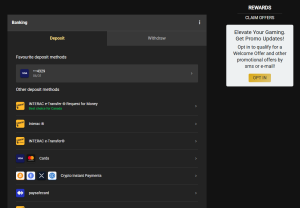
1. Log in to your preferred $1 deposit casino and navigate directly to the cashier or banking section.

2. Select either Visa Debit or Debit Mastercard from the list of available payment options.
3. Enter your deposit amount exactly as $1.00 CAD.
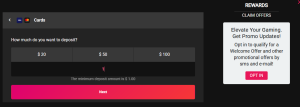
4. Input your cardholder details, including the 16-digit card number, the expiration date, and the 3-digit CVV security code found on the back of the card.
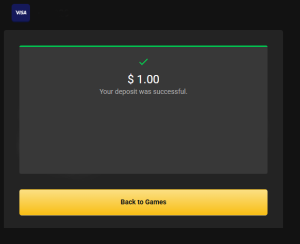
5. Confirm the transaction. If prompted, complete the quick two-factor authentication step provided by your bank to finalise the deposit.
The Canadian Choice: Interac
When it comes to local payment solutions, nothing compares to the trusted status of Interac. As Canada’s homegrown debit network, Interac is integrated into the daily financial lives of almost every Canadian. Whether splitting a dinner bill with friends or paying for groceries, Interac is the go-to payment system across the nation. In the context of online casinos, Interac e-Transfer and Interac Online have become the gold standard for secure, efficient, and locally optimised transactions.
The beauty of using Interac for a one-dollar deposit lies in its unique balance of extreme security and absolute familiarity. Because Interac acts as a secure intermediary between your financial institution and the online casino, you never have to share your sensitive bank account details or card numbers directly with the gaming site. The entire transaction is authorised within the highly secure environment of your own bank’s online banking portal or mobile app. Supported by major Canadian financial institutions—including RBC, TD Canada Trust, Scotiabank, BMO, and CIBC—Interac guarantees that your funds are transferred instantly and securely. This local relevance makes it highly appealing to Canadian players who value privacy and want to ensure their transactions are protected by domestic banking regulations. Furthermore, because Interac transactions are incredibly cheap to process, many top-tier online casinos willingly cover any associated minor fees, ensuring your full one-dollar deposit lands intact in your casino balance.
Using Interac for $1 Deposits
Using Canada’s favourite payment network to fund your online casino account with a single dollar is incredibly easy. Follow these simple steps:
1. Go to the casino’s cashier page and choose Interac e-Transfer or Interac Online as your deposit method.
2. Enter the deposit amount of $1.00 and click submit.
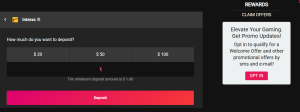
3. Select your Canadian bank from the list of supported financial institutions displayed on the screen.
4. You will be securely redirected to your bank’s online login page. Log in using your normal online banking credentials.
5. Select the account you wish to fund the deposit from, review the details, and approve the transfer. You will then be automatically redirected back to the casino with your funds ready to use.
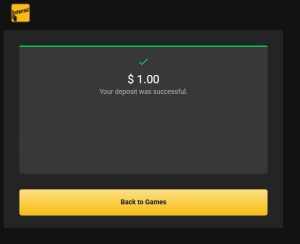
Modern Digital Solutions: Mobile Wallets and Prepaid Vouchers
As technology continues to evolve, Canadian casino players are increasingly turning to modern digital solutions to streamline their online transactions. Among these, mobile wallets like Apple Pay and Google Pay, as well as prepaid systems like Paysafecard, have emerged as highly efficient ways to deposit one dollar. These modern methods cater perfectly to mobile-first players who enjoy gaming on their smartphones or tablets, as well as players who prioritise absolute privacy and budget control.
Apple Pay and Google Pay act as highly secure digital containers for your existing debit or credit cards. When you use these services at an online casino, they utilise a process known as tokenisation. This means your actual card details are never transmitted over the internet; instead, a unique, single-use token is generated to complete the one-dollar transaction. This practically eliminates the risk of card data theft. Furthermore, authorisation is incredibly fast, requiring only a quick scan of your fingerprint or face, or the input of your device passcode.
On the other hand, Paysafecard offers an entirely different, yet equally powerful benefit: complete anonymity and financial isolation. Paysafecard is a prepaid voucher system that can be purchased physically at thousands of retail locations across Canada, including local gas stations, post offices, and convenience stores, or online via licensed distributors. You buy a voucher with a specific value and use the unique 16-digit PIN code printed on it to deposit funds. This is a game-changer for players who do not want any record of online gaming appearing on their bank statements. It also acts as the ultimate tool for budget control, as you can only ever spend the physical amount loaded onto the voucher, completely removing any temptation to overspend.
Depositing with Apple Pay and Google Pay
If you prefer using your mobile phone to manage your payments, depositing with Apple Pay or Google Pay is a lightning-fast experience:
1. Open the casino cashier on your mobile device and select either Apple Pay or Google Pay.
2. Specify your deposit amount as $1.00.
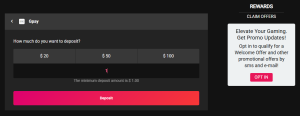
3. A secure payment sheet will slide up on your device screen, showing the card that will be charged.
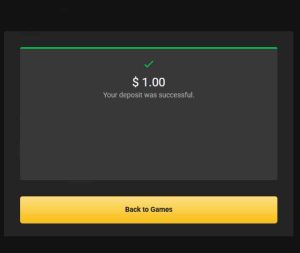
4. Confirm the payment using Face ID, Touch ID, or by entering your device’s security passcode. The transaction will process instantly, and your account will be funded.
Using Paysafecard for $1 Deposits
For those who prefer keeping their personal banking details entirely separate from their casino play, Paysafecard is the ideal solution:
- Purchase a Paysafecard voucher from a retail outlet in Canada or via a secure online portal.
- Navigate to the cashier at your chosen $1 deposit casino and select Paysafecard.
- Enter $1.00 as your desired deposit amount.
- When prompted, enter the unique 16-digit PIN code found on your Paysafecard voucher.
- Confirm the transaction. The one-dollar amount will be deducted from your voucher balance immediately, leaving the remaining voucher balance safe for future deposits.
Conclusion: Accessing $1 Deposits in Canada
The rise of minimum deposit casinos in Canada has successfully broken down the financial barriers to online gaming, making high-quality entertainment accessible to everyone. By utilising these three diverse payment pathways—traditional debit cards, the highly trusted Interac network, and modern digital wallets or prepaid systems like Apple Pay, Google Pay, and Paysafecard—Canadians can easily, securely, and cheaply deposit as little as one dollar into their online casino accounts.
Each of these payment methods offers its own unique set of advantages. Visa and Mastercard debit cards provide unparalleled familiarity and security. Interac offers a deeply integrated, uniquely Canadian banking experience that guarantees your details stay completely private. Meanwhile, mobile wallets and prepaid vouchers cater to the modern, security-conscious, mobile-first player who demands instant processing and absolute budget control. No matter which method you choose, you can play with complete peace of mind, knowing that your transactions are protected by cutting-edge security systems. We encourage you to explore the carefully reviewed, fully licensed list of minimum deposit casinos at Minimum Deposit Casinos (MDC) and start your low-stakes gaming adventure today with just a single loonie!
Is Wero the New Standard for Austrian Casino Banking Over Big Players Such as PayPal?
Online payments have come a long way. In an era where instant gratification is expected, sluggish payment processing is simply unacceptable. PayPal nailed this early on, quickly becoming the top choice with zero competition for years. But now, a new player is shaking things up in the European market.
Built specifically for European banking, Wero skips the middleman. It moves money straight from your account to the casino in seconds. So is Wero about to rewrite the rules for Austrian casino banking? Let’s find out.
The Evolving Landscape of Online Casino Payments
The way you pay for things online looks completely different from the way it did a decade ago. Modern fintech is all about speed and convenience. Fast transactions are no longer a bonus; today, online casino players expect them.
The fewer places your money has to travel before reaching its destination, the better. This has pushed online casino payments in a clear direction. Solutions that plug right into your current bank account are winning. You get less friction and faster payouts.
PayPal’s Reign: A Look at the Digital Wallet Giant
PayPal built something truly remarkable. The company started out solving trust issues on early eBay. From there, it grew into the world’s most famous e-wallet. Now, it has hundreds of millions of users and is accepted at thousands of online casinos.
The PayPal name gives you a sense of consumer protection that normal card payments can’t match. But PayPal is a closed-loop US system. This means it runs on its own internal network, completely separate from European banking infrastructure.
That creates a gap between your bank and the final payment. New European systems like Wero now challenge that model. They focus on direct integration instead of layered services.
The ‘Middleman’ Approach and Its Implications
To use PayPal, you need a PayPal account. Think about what that actually means. You send money from your bank to PayPal, and then from PayPal to the casino. This involves two transfers, an extra step, and an additional platform holding your funds at some point in the chain.
That creates a bit of friction. You either keep your PayPal balance topped up or wait for money to move over from your bank. You also have to remember another password, manage another account, and trust another company with your data.
PayPal was not built for SEPA rails. The platform operates alongside European banking rather than within it. The result is a system that works fine. But for Austrians, the structure just doesn’t match up.
Introducing Wero: Austria’s Homegrown European Banking Innovation
Wero was created around a different philosophy. Launched by the European Payments Initiative and backed by major European banks, Wero isn’t a wallet layered on top of your bank account. Wero is your bank account.
That distinction is the whole point. When you pay with Wero, you aren’t funding a third-party platform. You are making a direct bank transfer. Money moves from your Austrian IBAN straight to the online casino in real time, leveraging the efficiency of SEPA Instant rails.
You don’t need to create a separate account or manage a balance. You use the banking app you trust with the IBAN you already have. Best of all, the money moves almost immediately.
Streamlined Transactions and Enhanced Security
Wero’s direct model makes a massive difference. The design completely changes how fast your money moves. Payments clear instantly. That means your casino deposit goes live as soon as you confirm the payment.
Fewer touchpoints mean fewer ways for things to go wrong. Your bank already uses strong authentication and top-tier fraud monitoring. Wero inherits that whole setup by default. You get the security standards your bank already has under European law.
This also means no new data exposure. Wero doesn’t require the casino to store your credentials, and you never share data with a third party. The transaction happens entirely at the bank level.
Wero vs. PayPal: A Direct Comparison for Austrian Casino Players
Put both systems side by side and the differences become clear. Here’s what they actually mean:
- Account setup: PayPal requires a separate account, while Wero uses the bank account you already have. That removes a massive roadblock for players who just want a simple setup.
- Transaction speed: If your PayPal balance is empty, you’ll need to pull funds from your bank. That adds extra time. Wero was built around instant banking. Transfers are nearly instant.
- Fees: PayPal can hit you with fees depending on the currency and transaction type. Wero runs directly on bank rails. So for domestic transfers, that usually means fees are very low.
- Privacy and data: PayPal holds your data on US-based infrastructure. Wero keeps everything within the European banking system under GDPR and strict European financial regulations.
- Availability: PayPal is accepted at online casinos globally. Wero is newer and still growing its footprint in Austria. This is a real advantage PayPal still holds.
Speed, Simplicity, and the Future of European Payments
Once players get used to Wero’s speed, PayPal will start to feel noticeably slow. With Wero, you confirm the payment with Face ID or a fingerprint. Then, your deposit appears in under ten seconds.
SEPA Instant is the infrastructure behind all of this. European banks use it, and EU regulations back it up. The system was designed exactly for this kind of real-time, bank-to-bank settlement. Wero simply builds the user experience on top of that framework.
Is Wero the New Standard for Austrian Casino Banking?
Wero could potentially become the default payment method for Austrians. You get direct bank integration, instant transfers, and zero extra accounts. But becoming a standard takes time.
Its long-term success, however, hinges on broader adoption. More Austrian online casinos need to integrate the system, and banks must continue expanding support. Until acceptance becomes near-universal, some players may understandably stick with what they know.
The middleman model was good when direct bank transfers were slow. But SEPA Instant has made that model outdated. Wero is the first consumer product to make that infrastructure genuinely easy to use at checkout.
Conclusion: A Glimpse into the Future of Digital Casino Transactions
Online casino payments have always been about reducing friction. PayPal did that brilliantly for its era. Now, Wero does it better for the European context. Austrians in particular are seeing the benefits.
Faster payments, fewer steps, and everything runs through bank accounts players already trust. This creates a more efficient way to move money to your casino account and back again.
Wero may not have overtaken PayPal yet. But the path is clear. Check whether your preferred casino supports Wero, and try it. For those who value speed and direct banking, the switch is a no-brainer.
Goodbye Visa, Hello Wero? How Europe’s $/€24 Trillion Payment Shakeup Will Change Online Casino Deposits Forever
For decades, US payment giants Visa and Mastercard have dominated how money moves, including the billions flowing through European online casinos. Players never questioned it. They simply entered their card details and deposited funds.
Behind the scenes, a multi-trillion-dollar European open-banking revolution is quietly waking up. The European Payments Initiative has launched Wero, a digital wallet designed to bypass American infrastructure entirely by moving money directly between bank accounts.
Wero already reaches more than 47 million users across its initial markets. Major retailers are joining in. A huge agreement signed in February 2026 connects 130 million users across 13 countries. This new network targets the $/€24 trillion that flows through US card networks every year.
As this macroeconomic financial chess move prepares to hit casinos, will Wero become an alternative to traditional payment methods? Or will it run straight into a regulatory wall?
Understanding Wero: Europe’s New Open-Banking Challenger
Wero is the EU’s new open-banking wallet, built by a coalition of 16 major European banks including BNP Paribas, Worldline, and Deutsche Bank. Operating through secure APIs, Wero enables direct bank-to-bank transfers using SEPA Instant rails, bypassing third-party intermediaries entirely.

Unlike traditional card payments, transactions move directly between bank accounts rather than through card networks such as Visa or Mastercard. Users retain greater control over how their financial data is shared, while payments are authenticated through biometrics such as Face ID or fingerprints.
The broader goal is to give Europe a homegrown payment alternative that reduces reliance on foreign payment networks. This keeps more payment activity within the European financial ecosystem.
Currently, Wero is live in Belgium, France, and Germany, with retail rollouts already underway at major brands including Lidl, Decathlon, and Rossmann.
The Broader Payment Revolution: Challenging Visa and Mastercard’s Dominance
The launch of Wero goes way beyond a simple tech upgrade. This rollout is a calculated geopolitical breakup with American financial power. Visa and Mastercard together process roughly $/€24 trillion in transactions yearly. Card payments actually account for 56% of all cashless transactions in the EU.
European Central Bank President Christine Lagarde recently raised a red flag about how Europe handles money. Every single time a European swipes a card or buys something online, the transaction goes through American companies. This means Europeans completely lose control of their data.
Brussels sees this as a massive security risk. When sanctions cut Russia off from Visa and Mastercard, their payment systems tanked instantly. European leaders don’t want to find out what happens if they ever get locked out next.
The February 2024 agreement between EPI and the EuroPA Alliance changed the whole game. This deal connected national systems into one seamless network, including Italy’s Bancomat, Spain’s Bizum, Portugal’s MB WAY, and the Nordics’ Vipps MobilePay.
Instead of building a user base from scratch, this strategy integrates established national payment systems, leveraging their existing user bases and expanding Wero’s reach significantly. The long-term goal is total payment independence by 2029.
Wero’s Impact on iGaming: Opportunities and Regulatory Hurdles
The iGaming sector is one of the most profitable but payment-sensitive industries in Europe’s digital economy. For online casinos and sportsbooks, smooth payment processing makes or breaks user retention. Business survival depends on it.
Casino players want to deposit cash instantly and withdraw winnings without any delays. Operators want rock-bottom fees and zero chargebacks. Traditional card networks fail to deliver on either front as reliably as the industry needs.
Wero fixes a bunch of these issues. Direct bank-to-bank transfers are permanent, so chargebacks disappear. Transaction fees are lower than card rates. Because Wero links right to bank accounts, identity verification is already built-in. This means KYC checks get a lot faster and more accurate.
But iGaming is among the most heavily regulated industries in Europe. Any new payment method has to steer through tough licensing laws, responsible gambling rules, and anti-money laundering requirements.
The Promise for Online Casino Deposits
From a player’s perspective, they open the cashier, select Wero, confirm in their banking app, and the money arrives in seconds. No card details stored on casino servers. Less reliance on card authorisation systems. No waiting two days for a withdrawal.
Withdrawal speed is one of the most consistent complaints from online casino players. Because Wero moves money over instant SEPA rails, withdrawals can be just as fast as deposits. That makes the system a genuine upgrade over most existing card and e-wallet options.
For operators, the lower fee structure is incredibly compelling. Card processing fees in gambling run much higher than in standard retail due to high-risk labels. Wero’s account-to-account model completely bypasses that problem.
Every transaction traces back to a verified bank account, giving operators a clean audit trail for compliance. And since every single Wero payment requires biometric or app-based approval, fraud risks drop to almost zero.
Navigating Regulation: KYC, Compliance, and EU Jurisdiction
The biggest question mark for Wero in iGaming is how strict EU countries will handle compliance. Regulations in Europe are incredibly rigid, especially for identity checks and anti-money laundering rules.
Information highlighted by Wero Tracker shows that the platform places a heavy focus on bank-level authentication, transaction security, and compliance with European banking standards. Because you must authenticate through your regular bank to use Wero, the wallet acts like a verified digital ID.
This deep integration means regulators might actually push casinos to adopt Wero. They could view it as a dream tool for compliance. Instead of players uploading messy utility bills or blurry passport photos, the system tracks everything automatically at the banking level.
However, this same convenience raises valid privacy concerns. New payment setups usually trigger extra scrutiny. Regulators in Germany, France, and the Netherlands often restrict payment methods that complicate tracking. Because Wero is so new, it might face a cautious response at first.
The strict EU setup could turn Wero into a tool for hyper-precise tracking of spending. Even so, players who want total privacy might find this level of banking tracking incredibly invasive.
If regulators conclude that Wero’s bank links make it easier to enforce deposit limits, they have a great reason to embrace it. But if they focus on the lack of gambling-specific safeguards, expect a slower rollout. In that case, the system will probably look completely different in each EU country.
The Future of Payments: Wero’s Role in the Digital Casino Ecosystem
Wero is on track to become a major option at European online casinos, but it will take some time. Cross-border payments will launch this year, and online shopping features will follow in 2027. Since online gambling works just like online shopping, the technical setup is basically ready.
Regulatory approval decides how fast this takes off. That means Wero needs a clean track record in mainstream retail first. Visa and Mastercard still rule European payments. On top of that, giants like PayPal, Apple Pay, and Revolut are all fighting for the exact same users.
Success relies on handling the laws of different countries smoothly. If regulators use Wero to spy on players too aggressively, casual gamblers will just switch back to sketchy methods. If Wero balances privacy and rules perfectly, it will set a new global standard for safe digital gambling.
Wero is the exact setup the online gambling industry has always needed. The strict rules meant to make gambling safer might actually become Wero’s biggest selling point, not its roadblock.
Why Canadians Using Anything But Interac Are Paying a Tax They Don’t See
For Canadian online casino players, selecting a payment method is often treated as a secondary consideration. Many players focus on comparing welcome packages, game variety, software providers, and licensing. However, this oversight comes with a quiet, compounding cost. There is a silent drain on Canadian bankrolls that has nothing to do with house edge or bad luck at the tables. Instead, it is a hidden “tax” levied by international payment processors, currency conversion fees, and processing networks.
Every time you deposit or withdraw funds using international e-wallets, credit cards, or cryptocurrencies, small percentages of your hard-earned cash vanish. These aren’t official government taxes; they are administrative margins, currency spreads, and transaction surcharges designed to extract value from your transactions. Fortunately, Canadian players have access to a homegrown financial tool specifically built to bypass these international middlemen. By choosing Interac, you keep your bankroll intact. Let’s examine these hidden charges and why other methods end up costing you money.
The Unseen Cost of Currency Conversion
The most pervasive hidden tax in online gambling is the foreign exchange (FX) conversion fee. Despite Canada’s mature online gaming market, with local licensing via iGaming Ontario and Kahnawake, many global casino sites still operate their internal ledgers in United States Dollars (USD) or Euros (EUR). When a Canadian player deposits using an international payment method, a quiet double-conversion loop begins.
When funding an online casino account with an international digital wallet or payment gateway, even if your local bank holds Canadian Dollars (CAD), the network converts them to the casino’s operating currency (typically USD). For withdrawals, winnings convert back from USD to CAD. This double conversion is where the “conversion tax”.
This fee is rarely transparent, instead built directly into the exchange rate offered by the payment processor. These networks apply a retail exchange rate, including a hefty spread, not the mid-market rate you see online. A prime example of this can be found in the PayPal User Agreement. Under its standard terms, PayPal charges a currency conversion spread of 3.0% to 4.0% above the base exchange rate for international merchant transactions.
For example, depositing $500 CAD into a USD-denominated casino via an e-wallet can incur an immediate 4.0% exchange rate penalty, leaving $480 in equivalent betting power. Withdrawing that same value applies another 4.0% conversion fee. This silent process can erode nearly 8% of your capital through conversion spreads alone.
Interac changes this for Canadian players. Operating exclusively within the domestic Canadian banking system, Canadian-friendly casinos integrating Interac process all transactions natively in CAD. The transaction remains CAD end-to-end. Transferring $100 via Interac means exactly $100 lands in your casino balance; cashing out $500 means $500 arrives in your bank account. No foreign exchange conversions, hidden spreads, or middlemen taking a cut of your winnings.
Decoding Hidden Processing Fees
While currency conversion is a major financial leak, processing fees represent a second, equally costly “tax” on Canadian players. Many online casinos feature bold banners declaring “No Deposit Fees” or “Fee-Free Withdrawals.” However, these statements only mean the casino won’t charge you. The financial network, bank, or payment processor you choose to move your money will almost certainly demand a fee for their services. These fees vary wildly across different payment categories, but they all serve to steadily erode your bankroll.
- Credit Card Cash Advances: Canadian banks classify gambling transactions as cash advances, resulting in immediate flat fees and immediate interest accumulation.
- E-Wallet Fees: Services like PayPal and other international wallets charge percentage fees on incoming funds.
- Crypto Gas Fees: Cryptocurrency networks require variable transaction fees that can spike during times of heavy network congestion.
- Interac Flat Rates: Interac operates on a highly cost-efficient flat-fee structure that is often completely waived by Canadian banks.
Credit Cards and E-Wallets: The Percentage Drain
Credit cards, while convenient for online deposits, carry some of the most punitive hidden charges. When using a Canadian Visa or Mastercard for casino deposits, your financial institution (e.g., RBC, TD, BMO, Scotiabank) classifies it as a “cash advance” rather than a standard retail purchase.
This classification triggers immediate consequences. First, you are charged a flat cash advance fee, typically ranging from $5.00 to $7.50 per transaction. Second, and more importantly, the standard 21-day interest-free grace period is waived. Interest (often at an elevated rate of 22.99% or higher) begins accruing on your deposit from the very second the transaction is processed. If you do not pay off your credit card immediately, this interest rapidly compounds, inflating the true cost of your casino deposit.
Popular international e-wallets also levy significant fees that drain your funds. For example, when you receive merchant payouts (such as a casino withdrawal) to a PayPal account, standard fee models charge between 2.9% and 3.5% on incoming funds. If you are fortunate enough to win a $1,000 payout, a 3.5% processing fee will instantly strip $35.00 from your winnings before you can even think about moving that money to your local bank. These percentage-based drains represent a massive and unnecessary loss for active players.
Crypto Networks: Variable But Potentially High Fees
Cryptocurrency, often praised as a low-cost alternative, presents a highly volatile fee structure. When you deposit crypto—such as Bitcoin (BTC) or Ethereum (ETH)—into an online casino, you do not pay the casino; you pay the blockchain network’s validation fees, commonly known as “gas fees.”
These network fees are highly unpredictable and rise during times of heavy traffic. Depending on blockchain congestion, standard crypto wallet fees can range from $2.00 to as high as $20.00 or more per transaction. If you are a casual player making a modest $20.00 minimum deposit, a $10.00 network fee represents an immediate 50% loss of your playing capital. Furthermore, converting your cryptocurrency back into spendable CAD on an exchange introduces another layer of withdrawal and trading fees, making it highly inefficient for Canadian players maximizing payouts.
Interac: The Low-Cost Alternative
In contrast to credit cards, international e-wallets, and volatile crypto networks, Interac offers an incredibly transparent, low-cost structure. Because Interac operates as a domestic interbank network, it does not need to cover international payment rails or complex conversion processes.
The core fee structure for Interac is remarkably simple:
- Interac transactions typically carry a flat fee ranging from $0.00 to $1.50, regardless of the transaction size.
- Many modern Canadian bank accounts (such as unlimited transaction packages from CIBC, Simplii Financial, or Tangerine) waive Interac e-Transfer fees entirely, allowing for completely free transactions.
- Even if your bank charges a fee, it is always a flat rate. You will pay the same $1.00 fee whether you are transferring a modest $10 deposit or a major $2,500 withdrawal.
By replacing percentage-based transaction drains with an ultra-low flat fee, Interac ensures that almost all of your money remains exactly where it belongs: in your casino account or back in your wallet.
Streamlining Verification: Interac’s Edge in KYC
Beyond the direct financial savings, Interac offers an additional, highly practical benefit in the area of player verification. Every legitimate, licensed online casino in Canada is required by law to conduct Know Your Customer (KYC) identity checks before processing a player’s first withdrawal. This regulatory requirement is designed to prevent money laundering, fraud, and underage gambling.
Under normal circumstances, the KYC process can be slow and frustrating. Players are often required to upload photos of their government-issued ID, physical utility bills to prove their address, and front-and-back photos of their physical credit cards (with the middle digits blocked out) to prove ownership of the payment method. If these documents are rejected due to poor lighting or formatting issues, your payout can be delayed for days.
While first-cashout KYC verification checks exist on every payment method, Interac’s bank-login origination simplifies and accelerates the casino’s identity checks. When you use Interac, you authenticate the transaction by logging directly into your personal bank account. Because your Canadian bank has already verified your identity under strict federal regulations to open your account, the casino receives a secure, pre-validated transaction.
This pre-verified banking link provides the casino’s security team with immediate assurance that the person depositing is the same person who owns the bank account. This dramatically reduces document verification friction and helps speed up your withdrawal approvals. While this speed benefit is a supporting perk rather than the primary reason to use Interac, it adds a layer of convenience that credit cards and crypto simply cannot match.
Making the Smart Choice: Why Interac is King for Canadians
In the highly competitive world of online gaming, maintaining control over your money is crucial. Every dollar lost to unnecessary administrative fees, foreign exchange spreads, and credit card cash advance charges is a dollar that could have been used to enjoy your gaming experience. When you choose international e-wallets, credit cards, or cryptocurrencies, you are paying an invisible “tax” that continuously chips away at your bankroll.
Interac eliminates these financial leaks. By facilitating secure, direct, CAD end-to-end transactions, Interac guarantees that you will never lose a single cent to currency conversion rates or retail exchange spreads. With flat-rate transaction fees ranging from zero to $1.50, it is the most affordable payment tool available to Canadian players. When combined with the added benefit of bank-level security that streamlines your KYC identity checks, Interac stands out as the ultimate payment method for Canadian online casino enthusiasts.
Protect your hard-earned bankroll and stop paying fees you don’t have to. Choose Interac at Canadian-friendly online casinos and keep 100% of your funds where they belong—in your pocket.
3 Ways Good Gamblers Are Testing Casinos Without Breaking the Bank
In the expansive and often overwhelming world of online gambling, the thrill of discovering a new platform is tempered by an underlying sense of caution. For the savvy player, the goal isn’t just to win; it is to explore, evaluate, and enjoy new gaming environments without exposing their bankroll to unnecessary risk. Whether you are a casual spinner or a seasoned strategist, diving into a new casino with a large deposit is a gamble in itself—one that isn’t always necessary.
Good gamblers have mastered the art of “testing the waters.” By utilizing strategic approaches, they can experience everything a site has to offer—from game fluidity to withdrawal speed—without the pressure of a heavy initial investment. In this guide, we explore the three most effective ways to test casinos while keeping your budget firmly in check, ensuring you make informed decisions before you ever decide to go big.
The Power of Low Minimum Deposits
The most immediate tool at your disposal is the low-deposit threshold. Many players fall into the trap of assuming that a respectable online casino experience requires a three-digit deposit, but that couldn’t be further from the truth. Low-deposit casinos have revolutionized the industry, allowing gamblers to access a full suite of features without needing to commit significant capital upfront.
When you choose to start with a smaller amount, you are essentially buying a “test drive.” This approach removes the psychological stress of potential loss, allowing you to focus on the platform’s performance. If the user interface is clunky, if the customer service is unresponsive, or if the game library lacks variety, you haven’t lost a fortune finding out. It is a prudent way to assess whether a casino aligns with your personal preferences before you commit your hard-earned money.
What Constitutes a “Low” Minimum Deposit?
In the global market, a “low” deposit typically refers to $/€1 deposit casinos, $/€5 deposit casinos, or $/€10 deposit casinos. While some standard platforms might require a minimum of $/€20 or more, these flexible alternatives cater specifically to players who prioritize control over their spending.
It is important to note that these thresholds can vary depending on your payment method. For instance, e-wallets often offer lower minimums than bank transfers, which may incur processing fees that make smaller deposits impractical for the operator. Understanding these nuances is key to identifying which platforms are truly accommodating to small-stakes testing.
Benefits Beyond Financial Risk
The beauty of low-deposit casinos extends well beyond the financial aspect. By depositing a nominal amount, you gain unfettered access to the casino’s ecosystem. You can test mobile compatibility—seeing if the site functions smoothly on your smartphone or tablet—without having to download a bulky app first. You can interact with live chat support to gauge their professionalism and speed. Most importantly, you can make a small withdrawal to see how efficient the casino’s payout process actually is, which is often the ultimate test of a platform’s reliability.
Leveraging Independent Reviews for Informed Choices
Before you even process a deposit, the most powerful weapon in your arsenal is information. Casino reviews act as a filter, saving you countless hours and money by highlighting a platform’s strengths and weaknesses before you sign up. The online gambling space is saturated, and not every site is built to the same standard. Independent, objective analysis is your best defence against predatory terms or technical shortcomings.
What to Look for in a Comprehensive Review
A high-quality, professional review should serve as a deep dive into the operator’s integrity. When reading a review on a site like MDC, look for specific details regarding:
- Licensing and Regulation: Is the casino licensed by a reputable authority?
- Game Selection: Does the site offer games from top-tier software providers like NetEnt, Microgaming, or Evolution Gaming?
- Payment Methods: Are there diverse, localized options available for your region?
- Withdrawal Speeds: Do they offer fast payouts, or is the process notoriously slow?
- Responsible Gambling Tools: Does the site offer features like deposit limits or self-exclusion?
Avoiding Pitfalls: Identifying Biased or Outdated Reviews
Not all reviews are created equal. Be wary of “reviews” that read like marketing copy and offer nothing but praise. A genuine critique will always acknowledge flaws or specific limitations of a site. Additionally, always check the publication date. The online casino industry changes rapidly; a review from three years ago may be completely irrelevant today. If an article fails to mention current regulations or updated payment options, it is time to move on to a more reliable source.
Community Insights and Player Experiences
While expert reviews are essential, they shouldn’t be your only source. Check player forums and community boards to see what others are saying. Sometimes, a professional reviewer might not encounter a specific glitch that a daily player experiences. Real-world feedback on how a casino treats its players during disputes or handles promotional disputes can be invaluable.
Unlocking Value Through Exclusive Offers
The final piece of the “smart gambler” puzzle is the use of exclusive bonuses. Many gamblers simply visit a casino’s homepage and sign up, missing out on superior deals that are only available through affiliate partners. Using authoritative sources to access these exclusive offers is a massive value-add that directly improves your ability to test a casino without overspending.
Understanding Exclusive Bonuses and Promotions
Exclusive offers are bespoke promotions negotiated between the casino and reputable review portals. These often include improved matched deposit bonuses, a higher volume of free spins, or even no-deposit bonuses that allow you to try games with the casino’s money rather than your own. These differ from standard sign-up offers because they are frequently structured with more favorable terms, such as lower wagering requirements, specifically to attract the high-quality players that affiliate sites bring to the table.
How to Access Exclusive Deals
Accessing these deals is usually as simple as clicking a specific link on an established gambling information portal or entering a unique bonus code during registration. By utilizing these channels, you aren’t just getting a bonus; you are leveraging the bargaining power of the affiliate to secure terms that the general public cannot access. Always ensure you are navigating through trusted, established websites to guarantee the safety and validity of the offer.
Maximizing Exclusive Offers: Terms and Conditions
A common mistake made by novices is failing to read the fine print. Even the most generous exclusive offer comes with terms and conditions. Pay close attention to:
- Wagering Requirements: How many times must you play through the bonus before you can withdraw?
- Game Restrictions: Are certain high-RTP games excluded from contributing toward wagering?
- Maximum Win Caps: Is there a limit on how much you can cash out from a bonus-funded win?
- Expiry Dates: How long do you have to meet these requirements before the bonus is voided?
Understanding these aspects ensures that you are truly getting the value you expect and prevents the frustration of being unable to withdraw winnings later on.
Conclusion: The Smart Gambler’s Toolkit
Testing an online casino doesn’t require a high-stakes approach. By utilizing low-deposit thresholds, conducting thorough research via independent reviews, and taking advantage of exclusive offers, you can effectively vet a platform while minimizing your financial exposure. These three strategies allow you to navigate the digital landscape with confidence and precision.
Remember, the goal of the smart gambler is longevity. By managing your bankroll with caution and making data-driven decisions, you create a sustainable and enjoyable experience. Whether you are looking for the latest slots or a premium live dealer experience, start small, stay informed, and always gamble responsibly. With the right tools and a strategic mindset, you can find your perfect casino without ever breaking the bank.
Why PayPal Remains a Key Payment Option in Canadian Online Gambling
For Canadian players navigating the vibrant world of online gaming, knowing how to fund an account is often just as important as the games themselves. In a market flooded with digital payment solutions, few names carry the same weight, longevity, and instant recognition as PayPal. Even as the fintech landscape evolves, PayPal remains a cornerstone of the Canadian online gambling experience. Its enduring relevance is no accident; it is the result of a long-standing reputation for bulletproof security, seamless user experience, and a level of consumer trust that few competitors can match.
When Canadian players look for PayPal Casinos, they aren’t just looking for a transaction method; they are looking for a safety net. Whether you are a casual player enjoying a few spins or a regular enthusiast, the peace of mind offered by this global giant is unparalleled. In this article, we will explore why, despite the emergence of dozens of localized banking solutions, PayPal continues to be a preferred option for customers across the Great White North. From its role as a secure intermediary to the unmatched speed of its transactions, we will break down exactly why this e-wallet maintains its ironclad position in the CA Casinos ecosystem.
Building Trust: PayPal’s Role as a Secure Intermediary
At the heart of the Canadian gambling experience is a deep-seated need for financial security. When players fund their gaming accounts, they are often apprehensive about sharing sensitive banking information with operators. This is where PayPal shines as a secure intermediary, fundamentally changing the risk profile of online transactions.
Unlike traditional credit card transactions or direct bank transfers where a player’s primary banking details are exposed to the merchant, PayPal acts as a protective layer. When you choose to deposit using your PayPal account, the gambling site never sees your credit card number or your personal bank account credentials. Instead, you simply authenticate your transaction through the PayPal portal.
This “blind” transaction model provides immense peace of mind to Canadian users. If a site experiences a data breach or if a player is simply wary of providing their financial details to an overseas-based operator, PayPal acts as a buffer. The transaction is processed over a highly encrypted network and verified by one of the world’s most advanced fraud-detection systems. For many Canadian players, this separation between their primary bank and the casino operator is the single most important factor in choosing a payment method. It allows them to focus on the game’s entertainment, confident that their sensitive financial information remains locked behind the vault of a globally trusted financial institution.
Seamless Transactions: Convenience and Brand Recognition
Beyond the fundamental aspect of security, convenience is the primary driver behind PayPal’s continued dominance. In a fast-paced digital world, Canadian players demand speed. Nobody wants to spend their leisure time navigating cumbersome verification processes or waiting days for funds to clear. PayPal offers a fast and simple way to deposit funds into a gambling account, often completing the process in just a few clicks.
The beauty of the PayPal experience lies in its familiarity. Most Canadians already possess a PayPal account for e-commerce, peer-to-peer transfers, or international payments. This means there is virtually no learning curve. When a user navigates to the cashier section of their chosen CA casino, seeing the familiar PayPal logo acts as a signal of reliability. It bridges the gap between a new, unfamiliar gaming site and the user’s established financial habits.
Furthermore, the transaction speed is generally near-instant. Deposits are reflected in the casino balance immediately, allowing for uninterrupted gameplay. While withdrawals to PayPal are typically faster than standard bank wires, the convenience is further enhanced by the mobile app integration. Players can authorize deposits directly from their smartphones, making it the perfect companion for the modern mobile-first Canadian gambler. When convenience, speed, and brand recognition converge, it creates a “sticky” user experience that keeps players returning to casinos that support the platform.
Navigating the Landscape: Availability and Regulatory Nuances
While the benefits of using PayPal are clear, it is important to provide a realistic overview of how the platform operates within the Canadian market. PayPal maintains a strong position in the industry, but it is not a “one-size-fits-all” solution. Its availability can sometimes vary according to the specific operator’s internal policies and the evolving regulatory framework of the provinces.
In Canada, the legal and regulatory environment for online gambling is multifaceted. While some provinces have launched highly regulated, localized markets, others operate under different standards. PayPal, as a global corporation, adheres to strict compliance protocols. Consequently, you may find that while a casino is licensed and legitimate, it may not offer PayPal as a payment option due to its own merchant agreements or geographical restrictions imposed by PayPal’s global risk management team.
For the Canadian player, this means that while PayPal is a top-tier option, it shouldn’t be the only payment method you keep in your arsenal. Players might notice that availability fluctuates depending on whether they are playing on a site with a specific provincial license or a more broadly recognized international site. However, these variations should not be viewed as a negative reflection on the casino’s quality, but rather as a reflection of the complex regulatory compliance requirements for major financial institutions. Before signing up, a quick check of the casino’s payment page will confirm if your preferred wallet is supported, ensuring you can manage your funds with the efficiency you expect.
PayPal’s Place in Canada’s Payment Ecosystem: Acknowledging Interac
To fully understand why PayPal remains a key player, one must acknowledge the broader Canadian payment ecosystem, most notably Interac’s influence. For many Canadians, Interac is the gold standard for reliability. Its seamless integration with virtually every Canadian financial institution makes it the “traditional” choice, and its reputation for speed and ease of use is well-earned. Interac is, without a doubt, the leading payment method for Canadians in many contexts, including online gaming.
However, the existence of Interac does not diminish the value of PayPal; rather, it highlights the different needs of various player segments. Interac provides a direct bank-to-casino connection, which is fantastic for users who prefer to keep their money within their primary bank account ecosystem. In contrast, PayPal offers an e-wallet solution that provides an extra layer of abstraction.
PayPal’s core advantage lies in its international recognition and its role as an independent wallet. For users who maintain a separate entertainment balance, or who play across multiple platforms, including international sites, an e-wallet like PayPal offers more flexibility than a direct bank transfer. While Interac represents the “local” reliability that Canadians know and trust, PayPal represents a “global” standard of security and intermediary protection. The two coexist because they cater to different preferences: some players want the directness of their bank, while others prioritize the intermediary shield that only an e-wallet can provide.
Why PayPal Continues to Thrive in Canadian Online Gambling
As we have explored, the enduring success of PayPal in the Canadian online gambling market is not merely a product of its massive brand recognition. It is a calculated choice made by thousands of players who value security, speed, and simplicity. PayPal remains a key payment option because it addresses the core anxieties associated with online betting while delivering a consistently fast, accessible user experience.
The combination of its status as a secure intermediary that shields sensitive banking data and its user-friendly interface makes it an essential tool for any serious player. Whether you are depositing at a local CA casino or exploring wider options, the presence of the PayPal logo remains a mark of a platform that prioritizes user trust and financial convenience. While competition from services like Interac is fierce and highly competent, PayPal continues to thrive by offering a unique, globally recognized alternative that fits the modern, mobile-oriented lifestyle of today’s Canadian gamblers.
Ultimately, when players search for PayPal Casinos, they are seeking a frictionless experience that lets them focus on the thrill of the game rather than the logistics of depositing. By offering an efficient, secure, and globally trusted way to manage funds, PayPal has cemented its status as a pillar of the Canadian online gaming community. As the industry continues to evolve, we can expect this relationship between the player, the platform, and the payment giant to remain as strong as ever.